
 Leisha
 I had never even heard of the curry tree before coming to Ecuador. Now I cannot imagine this place without her.
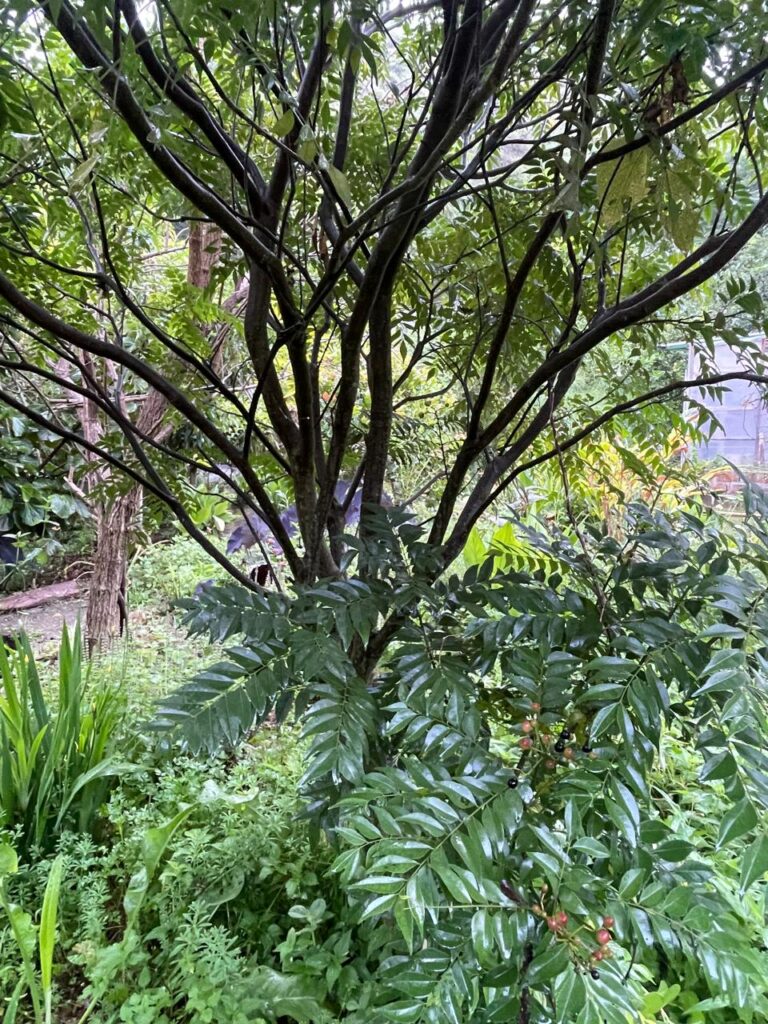
She is one of the most beautiful small trees in the garden, graceful and decorative, with glossy green leaves that seem to shimmer in the light.
Birds adore her. In truth, she could easily be called the Bird Tree. There is almost always movement in her branches, little wings fluttering as they perch and pluck at the berries.
The fruit ripens in clusters that hang like small jewels among the leaves. When the berries fall, seeds scatter beneath her and tiny seedlings appear soon after, protected in the soft shade of her canopy. She mothers her own next generation this way, quietly filling the ground beneath her with new life.
The curry tree, Murraya koenigii, is native to India and Sri Lanka but grows beautifully in warm climates around the world. She clearly loves my gardens and land. At her base I let nettle run wild, as nettle loves the scattered and dappled shade beneath her canopy.
Interestingly, she belongs to the citrus family, which explains the faint citrus undertone you notice when you crush the leaves between your fingers. The curry tree sits within the Rutaceae family, the same botanical family that includes oranges, lemons, and limes.
Like many of her citrus relatives, the leaves contain tiny oil glands that release aromatic compounds when the leaf is bruised or rubbed. That is why a single crushed leaf immediately releases its fragrance, carrying a light citrus brightness layered with something deeper and warmer that is difficult to describe but instantly recognizable once you have smelled it.
When added to hot oil or butter at the beginning of cooking, the leaves release an incredible fragrance. The flavor is complex, carrying hints of citrus, toasted spice, and something slightly nutty. In traditional cooking they are often fried briefly in oil with mustard seeds, garlic, ginger, or onion before other ingredients are added. The leaves are then left in the dish while it cooks, infusing the entire meal with their aroma.
Because they are somewhat firm, they are often removed before eating, much the way a bay leaf might be removed from a soup or stew. However, the leaves themselves are edible and can be finely chopped or ground if desired.
Beyond flavor, the leaves carry notable medicinal qualities. They contain a distinctive group of plant compounds known as carbazole alkaloids, along with flavonoids, phenolic compounds, and aromatic oils.
These molecules are produced by the plant as part of its own protective chemistry, yet when we consume the leaves they interact with the body in meaningful ways. These compounds act as powerful antioxidants, helping stabilize cells and reduce oxidative stress, while others influence metabolic signaling, digestion, and tissue repair.
The aromatic oils also stimulate digestive activity, gently encouraging the release of stomach acid, bile, and enzymes that help the body break down food efficiently. In this way the curry leaf functions not only as a culinary herb but as a small botanical pharmacy, offering both flavor and subtle physiological support each time it is used in the kitchen.
One of their most recognized effects is their ability to support healthy glucose metabolism. Both traditional use and modern investigation suggest that compounds in curry leaves can help improve insulin signaling and the way cells respond to circulating glucose. Rather than allowing sugar to linger in the bloodstream, these plant compounds appear to encourage cells to absorb and utilize glucose more efficiently, supporting steadier energy and metabolic balance.
This gentle regulatory influence is one reason curry leaves have long been included in everyday cooking in the regions where the tree grows. Used regularly in small amounts, they become part of the daily rhythm of nourishment, quietly assisting the body in maintaining stable blood sugar over time.
The leaves also support digestive activity. Aromatic plants stimulate receptors in the mouth and stomach that signal the body to release digestive secretions. When curry leaves are eaten, they encourage the release of stomach acid, bile, and digestive enzymes. This improves the breakdown of fats and proteins and helps prevent food from lingering in the digestive tract where it can ferment or cause discomfort.
Another important action of the leaves is their supportive role for the liver. The liver is continually filtering and transforming compounds that arrive from food, microbial activity in the gut, and environmental exposures. Every meal, every metabolite produced by gut microbes, and every chemical the body encounters eventually passes through this organ for processing. The liver breaks down fats, converts nutrients into usable forms, regulates blood sugar, produces bile for digestion, and neutralizes compounds that the body does not want circulating in the bloodstream.
The polyphenols and carbazole alkaloids found in curry leaves appear to assist this work in several ways. Some of these compounds stimulate the activity of detoxification enzymes inside liver cells. These enzymes operate in stages, often described as Phase I and Phase II processes, where compounds are first broken apart and then transformed into forms that can be safely removed through bile or urine. Plant polyphenols help maintain the efficiency of these pathways so the liver can continue processing compounds without becoming overwhelmed.
At the same time, many of the compounds in curry leaves function as antioxidants. During detoxification the liver generates reactive molecules as it breaks down toxins and metabolic byproducts. If these accumulate, they can damage liver cells. The antioxidants in curry leaves help neutralize these reactive molecules, protecting cellular membranes and supporting the repair processes that keep liver tissue functioning well.
The leaves also indirectly support the liver through digestion. Their aromatic oils stimulate the production and flow of bile, which is essential for breaking down fats and carrying waste products out of the body. Healthy bile flow allows the liver to move processed compounds into the digestive tract for elimination rather than allowing them to circulate longer than necessary.
In traditional herbal systems this is why curry leaves were often included in everyday meals rather than taken as a concentrated medicine. Used regularly in cooking, they provide small but consistent support to the liver’s workload. Instead of forcing dramatic changes, they quietly assist the body’s natural detoxification rhythms, helping the liver continue its constant task of filtering, transforming, and balancing the internal chemistry of the body.
They also appear to support nerve health. Some of the carbazole alkaloids present in curry leaves have been studied for their neuroprotective qualities, suggesting that these compounds help protect delicate nerve cells from oxidative stress and inflammation. Nerve tissue is particularly vulnerable to damage because neurons must remain active and electrically responsive throughout life, which places high metabolic demands on them. The antioxidants and plant alkaloids found in the leaves help stabilize cellular membranes and protect nerve cells from the kinds of molecular damage that can accumulate over time.
Some research suggests that these compounds may also encourage the survival and regeneration of nerve cells by supporting signaling pathways involved in neuronal growth and repair. Healthy nerve tissue depends on a complex network of communication between cells, and the compounds in curry leaves appear to help maintain that communication by supporting the biochemical environment in which neurons function. Over time this may contribute to better cognitive clarity, memory support, and overall nervous system resilience.
In traditional food cultures where curry leaves are used daily, the plant functions less as a targeted medicine and more as a steady ally for long term vitality. By providing antioxidant protection and supporting the biochemical stability of nerve tissue, the leaves contribute quietly to the maintenance of healthy brain and nerve function.
Then there are the berries, which are less widely known but equally fascinating.
As the berries ripen, their chemistry changes in a way that appears designed to recruit birds. When the fruit is young it is green and chemically protective. As it matures the color shifts first to red and then to deep purple or black, signaling that the fruit is ready to eat. At the same time the sugars increase and the protective compounds soften. Birds are naturally drawn to these colors and quickly harvest the fruit, swallowing the pulp and carrying the seed elsewhere.
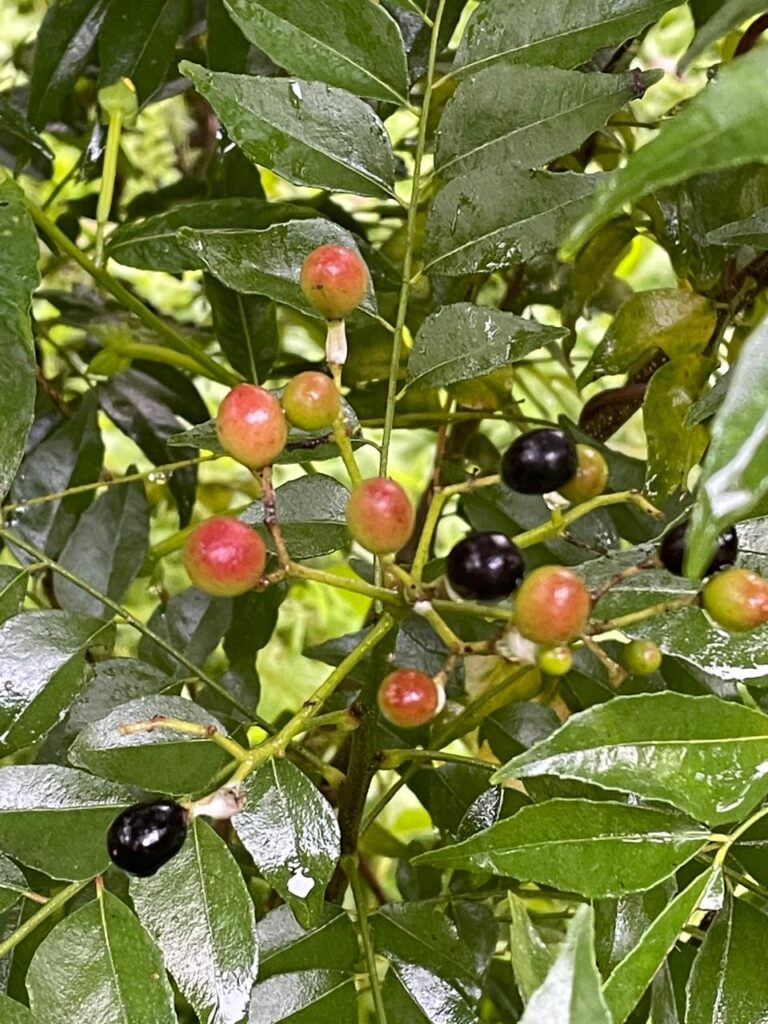
The dark pigments in the ripe berries, known as anthocyanins, protect the fruit from sun damage while it ripens, and when consumed they interact with the digestive system and the microbes that live there, where they are transformed into smaller compounds that influence circulation, metabolism, and cellular protection.
The berries grow in small clusters that emerge after the tree flowers. At first they are green and firm. As they mature they turn bright red, a stage that signals to birds that the fruit is almost ready. Eventually they deepen to a glossy purple or black, which is the fully ripe stage.
Each berry is small, usually about the size of a pea or slightly larger. The skin is smooth and shiny. Inside is a thin layer of soft pulp surrounding a single seed. The seed itself is not eaten, but the pulp is edible and carries a mild, slightly sweet flavor with a subtle aromatic quality that reflects the character of the leaves.
The dark color of the ripe berries reveals the presence of anthocyanins, a group of pigments also found in blueberries, blackberries, and other dark fruits. These compounds are powerful antioxidants that help protect cells from oxidative damage. They stabilize cellular membranes, support vascular health, and assist the body in managing inflammatory stress.
The berries also contain carbazole alkaloids similar to those found in the leaves. These compounds contribute to the plant’s reputation for supporting metabolic balance, particularly blood sugar regulation. In the body they appear to influence enzymes involved in carbohydrate metabolism and may help improve insulin sensitivity.
Another interesting aspect of the berries is their effect on the digestive ecosystem.
Polyphenols from fruits are often transformed by gut microbes into smaller metabolites that can influence many aspects of human physiology. When berries like these are eaten, they feed specific microbial populations that specialize in breaking down plant polyphenols. These microbes convert the compounds into metabolites that circulate through the body and influence inflammation, vascular tone, and metabolic signaling.
The berries also carry aromatic oils that gently stimulate digestion, much like the leaves. In traditional preparations the fruit pulp has sometimes been mashed into chutneys, fermented pastes, or herbal preparations where both flavor and medicinal compounds could be preserved.
In the plant itself these compounds serve another purpose. They are part of the tree’s own defense and communication system. Plants produce polyphenols, aromatic oils, and alkaloids partly to regulate the microbial communities that live around their roots and on their leaves. These molecules shape the microbial world that surrounds the plant, encouraging beneficial relationships and discouraging organisms that would damage it.
When we eat plants like the curry tree, we are essentially borrowing some of the chemistry the plant developed to maintain balance with the living world around it.
Perhaps that is why this tree feels so alive in the garden. It is not just a plant that feeds birds and flavors food. It is a small ecosystem in itself. The birds carry its seeds, the soil supports its roots, and beneath its branches new seedlings appear quietly, waiting their turn to rise through the shade.
The curry tree reminds me that many of the most valuable medicines are quietly growing around us, not in bottles but in living landscapes.
Her leaves flavor the kitchen, her berries feed the birds, and her chemistry supports the body in subtle ways that accumulate over time. In the garden she stands as a small ecosystem, offering shade for seedlings, food for wildlife, and nourishment for those who learn to recognize her gifts. What began for me as an unfamiliar tree has become one of the quiet teachers of this land.


