
 Leisha
 I never imagined that I would one day use banana flowers as medicine.
But, here in Ecuador, they hang in the garden, bold and purple, their petals opening one by one to reveal tiny hands of bananas inside. They looked more like ornaments than remedies, too grand to be anything other than part of the banana’s show of abundance.
Their intensity makes me pause. There was something about the way they drooped heavily, shining with waxy color, that carried a certain presence. It made me wonder if a flower so commanding might also hold a kind of medicine that was not immediately obvious.
Curiosity led me into research, and what I found surprised me. Herbalists and flower essence practitioners spoke of banana flower essence as a remedy for those with very large personalities. It was said to support people who had grown tired from always performing, always maintaining a certain image, always keeping up the energy that others expected of them.
I thought of so many people I knew (including myself), bright and powerful individuals who shone in the world yet came home depleted, hiding their exhaustion. The banana flower essence was described as a medicine that helps such people to soften, to release the constant striving, and to rest in their true self without the weight of an image to uphold. The flowers, so extravagant in appearance, offered an essence of humility and restoration.
This teaching resonated with me deeply. In a culture that often rewards the loudest voice, the biggest display, the strongest image, many of us learn to push ourselves beyond our natural energy. We become tired from trying to live up to expectations, even when those expectations are our own. The banana flower offers permission to rest from that effort. It is medicine not of expansion but of release, not of striving but of surrender. The flower that looks so bold turns out to heal the exhaustion that boldness can create.
Beyond the essence, banana flowers are also food, and in that food is further medicine. In many parts of Asia, the petals are cooked into curries, soups, and fritters.
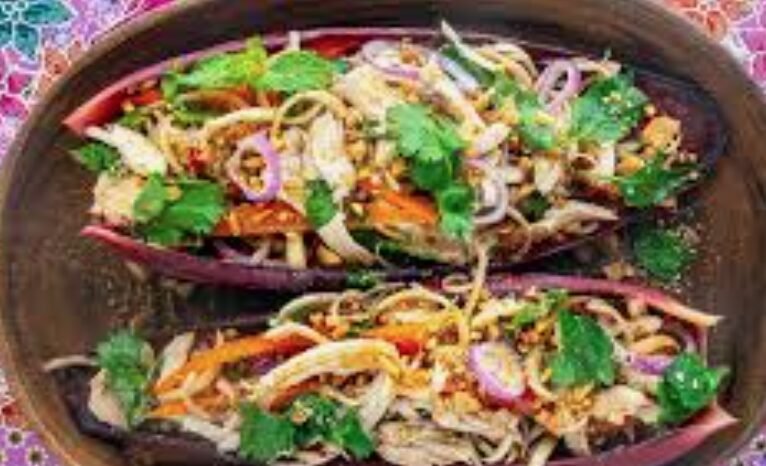
The reason they must be cooked is because the petals are heavy with tannins and bitter compounds when raw. This bitterness is medicine in itself, stimulating digestion and cleansing the blood, but it is far too strong to consume uncooked. Cooking transforms the bitterness into depth, softening the texture and making the flavor palatable. Heat unlocks their nutrients and changes the chemistry so the body can receive them with gratitude rather than resistance. It is a good reminder that not all medicine is meant to be taken raw or fresh. Sometimes fire must work on it first, just as life’s challenges transform our own intensity into wisdom.
The nutritional medicine of banana flowers is remarkable. They are rich in fiber, which soothes digestion and regulates elimination. They contain antioxidants that protect tissues from stress and inflammation. Their minerals include calcium, iron, and potassium, all of which support blood and nerve health. In traditional systems they are used for regulating menstruation, calming excessive bleeding, and strengthening the uterus. They have a reputation for supporting lactation and nourishing mothers after childbirth.
The flowers, though so extravagant to look at, hold a grounded and deeply feminine medicine once you bring them into the kitchen.
I remember the first time I prepared banana flower curry. I peeled away the thick outer petals, each one deep purple and glossy, until I reached the tender heart inside. As each petal opened it revealed rows of tiny immature bananas, miniature fruits that would never grow. These too can be used, once trimmed, but it is the tender core that cooks into a beautiful dish. I chopped it finely, soaking it briefly in water with lemon juice to prevent darkening. The aroma was earthy and bitter, promising strength rather than sweetness.
The recipe I followed was simple but full of spice. First I heated oil in a pan and added mustard seeds, cumin seeds, and curry leaves until they popped and released their fragrance. Then came chopped onion, garlic, and ginger, sautéed until golden. I added turmeric, coriander, and a touch of chili for heat, then stirred in the chopped banana flower. A splash of coconut milk softened the bitterness, and I let it simmer gently until the flavors melded. The final dish was a thick, fragrant curry with a taste both bitter and rich, the kind of food that feels as though it is cleaning and strengthening you at the same time.
When I ate that curry, I felt something unexpected. The bitterness did not overwhelm me, it grounded me. It was as if the flower’s boldness in the garden had been transformed by cooking into steadiness in my body. It reminded me of the way the flower essence works emotionally, softening the exhausting need to perform and turning intensity into a more sustainable strength. The curry was not just food, it was nourishment in the truest sense.
I think often of the lesson hidden in the banana flower. It shows us that behind the show of boldness there can be weariness. Behind the display of strength there can be longing for rest. The flower essence helps those who are always on stage, always being the strong one, to find peace in stepping back.
The cooked flower nourishes the blood, the womb, and the gut, restoring from the inside out. The same plant that dazzles with flamboyant beauty offers medicine of humility, grounding, and release.
In my own life I have learned to turn to the banana flower when I feel stretched thin from carrying too much. It reminds me that I do not always need to shine so brightly, that there is medicine in allowing myself to be quiet, to receive instead of give, to soften instead of strive. The bold petals, once cooked, become food that heals. The extravagant image, once distilled into essence, becomes humility that restores. This is how plants teach us, not only through their chemistry but through their presence, their form, and the way they move us to reflection.
The banana flower, hanging heavy beneath its stalk, looks almost too dramatic to be useful. But in truth it is a gift, both as food and as subtle medicine. It is proof that even the boldest displays can carry lessons of gentleness. It reminds us that rest is as important as striving, that nourishment comes not only from sweetness but also from bitterness transformed, and that the image we present to the world is only part of who we are.


