
 Leisha
 The Beginning of Living Ground
Sometimes you do not set out to build a project. Sometimes a project builds you.
Living Ground did not begin with a clear plan or a grand design. It began with an ache for self-reliance, a longing to live closer to the land, and a compost of a dream that refused to die. It grew out of mistakes, sweat, and sleepless nights, out of a lifetime of working to survive and a heart determined to live differently.
This is the story of how Living Ground went from soil, compost, microbes, and gardens, store, cafe and continues into the future of an education center. The quiet lessons of the earth shaped not only a piece of land in Ecuador but also the person tending it, me. I suppose it starts with my story….
Most of my life I have been part of the serving class. I worked to pay bills, to keep a roof over my head, to stay afloat. Somewhere deep down, I always believed that self-reliance was the secret to breaking free from the construct of modern life.
At thirty, I had my first taste of “getting out.” I owned three gas stations and a large country convenience store. I suppose on paper, I had succeeded or was on my way to success. Then I traveled to South Africa to visit my parents who were working in a mission. There, I met some of the poorest and happiest people I had ever seen. Their joy shattered my understanding of wealth. They had almost nothing, yet they carried light in their eyes I have never seen before and since.
I came home changed. I sold the businesses and the houses and moved to the “country”, into a small log cabin surrounded by forest. My goal was self-reliance, a different life for my daughter and hopes of freedom. I had no idea how to do it. I was young enough to believe I did. I worked hard, cleaned, waitressed, gardened, and studied, carving a path toward a different way of living.
That little patch of land became my first experiment in creating eceltic gardens and a retreat center. Instead, it became a kind of shelter. A plan I didn’t realize. The people who came were not vacationers or seekers. They were the displaced, the struggling, the broken ones. I wanted to offer them healing, but I was still learning how to heal myself. I was learning lessons I didn’t know I need to learn. I really felt I could help others and now I realize, they helped me. And, I realized how hard self-reliance could be inside a system that demands obedience to taxes, bills, and endless rules.
I failed by worldly or cultural standards, but I learned something vital. The system is not designed for freedom. It rewards dependency. Yet I sensed something else was coming. There was fog everywhere, but a faint light behind it. I wanted to fly again, start again, try again. But, my family demanded roots.
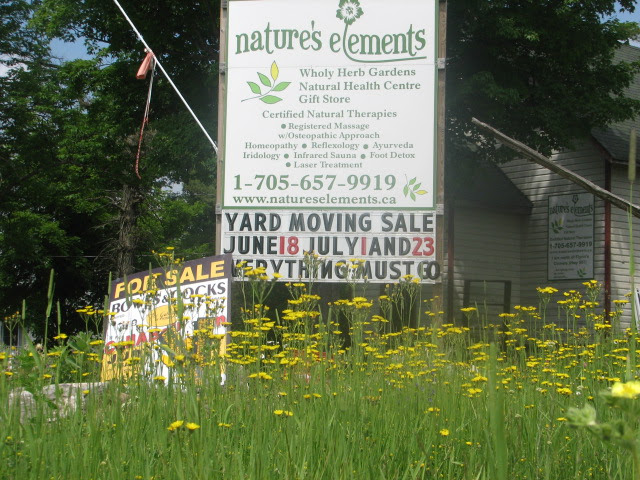
As a family, we did move once more…and I converted an 1867 old church into a Natural Health Clinic feeling this was my calling…
Then came Ecuador.
I arrived in Ecuador carrying both exhaustion and hope. My marriage had finally ended, and I was ready to begin again. I found myself in a barren forested valley in the mountains near Vilcabamba. I was supposed to be camping for a break. But, I never left and the outdoor camping skills became life for me.
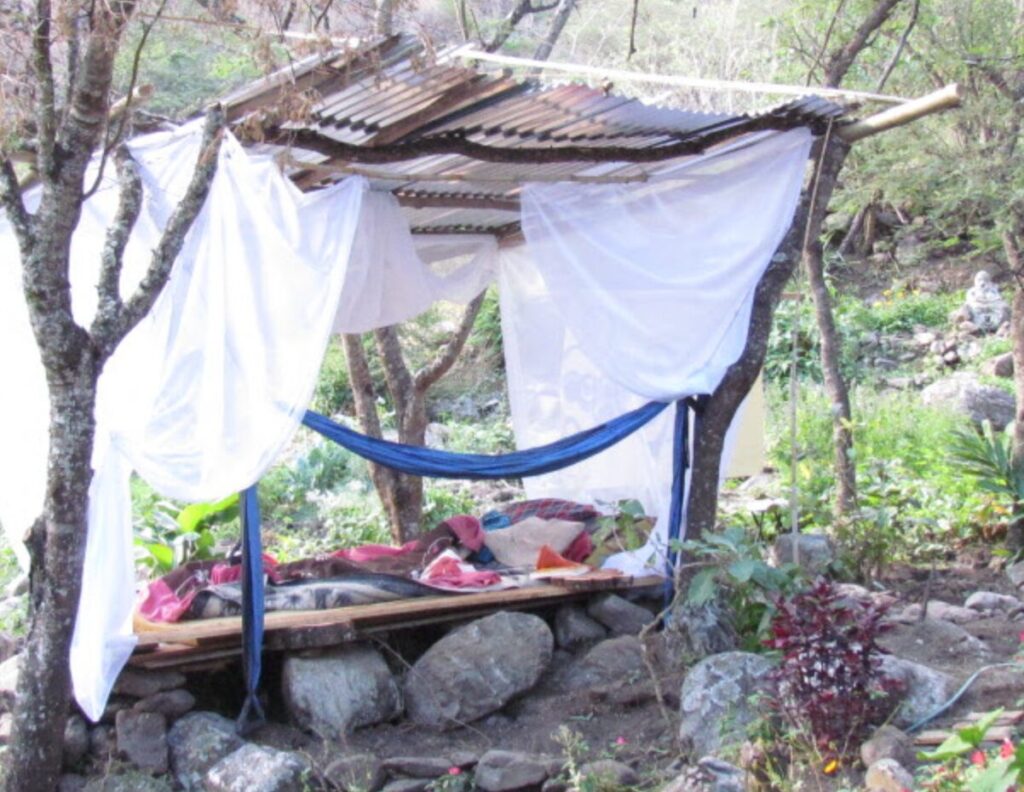
I literally created an outdoor life without money. I built a kitchen, a composting toilet, tree houses, and sleeping platforms. There were no walls, very little money, and a great deal of peace. I learned how to live with less, to make do, and to find happiness in simplicity. My standards at that time were even lower than the local Ecuadorians’, but I was content.
Eventually, I returned to civilization because I fell in love. That story is for another time, but it led me back toward people, toward community, and toward the seed of what would become Living Ground.
A Rented Field And A Wild Idea
Before there was a Project Site, before there was a café or a garden or even a name, there was a small rented field near my home. That is where Living Ground truly began.
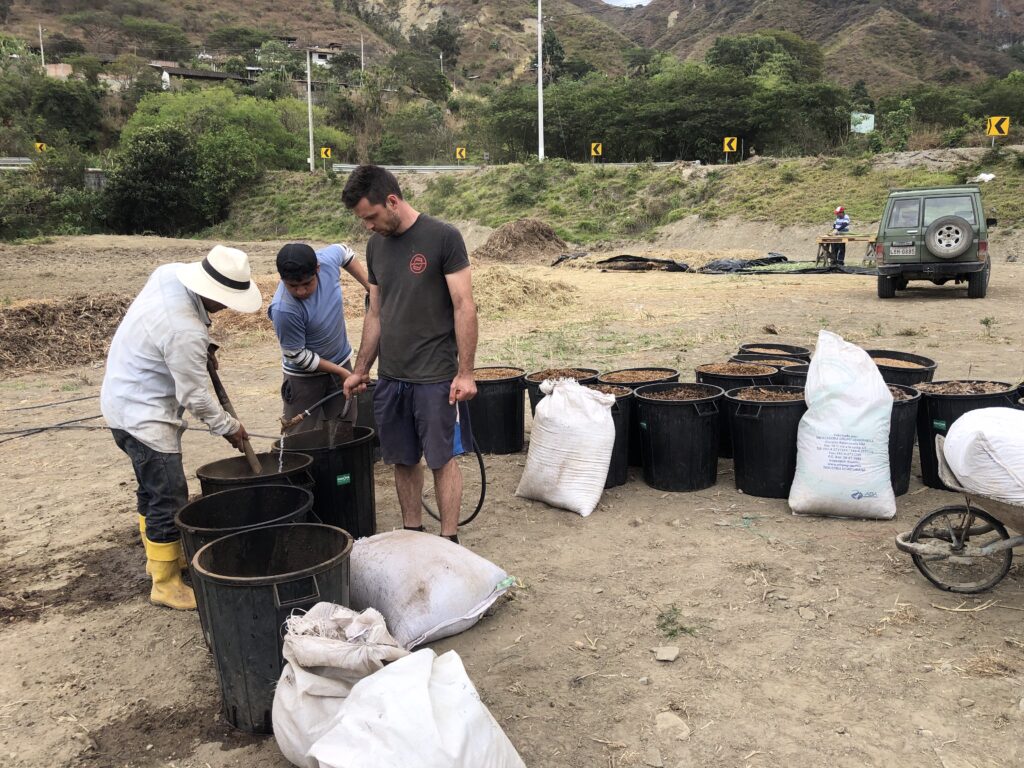
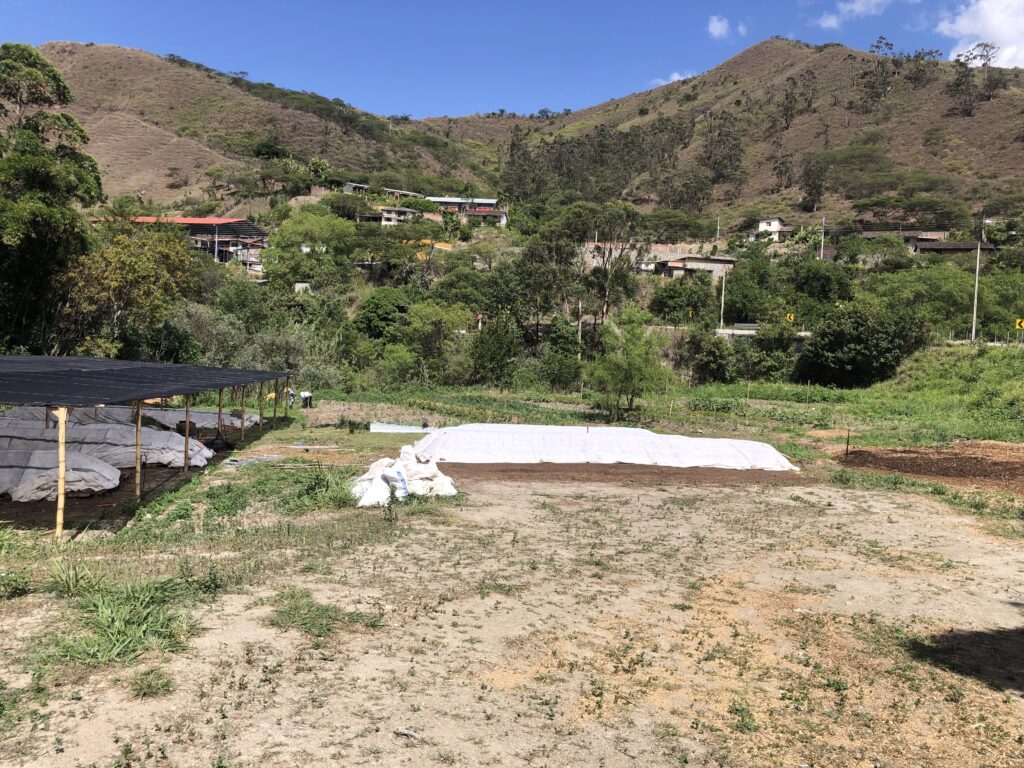
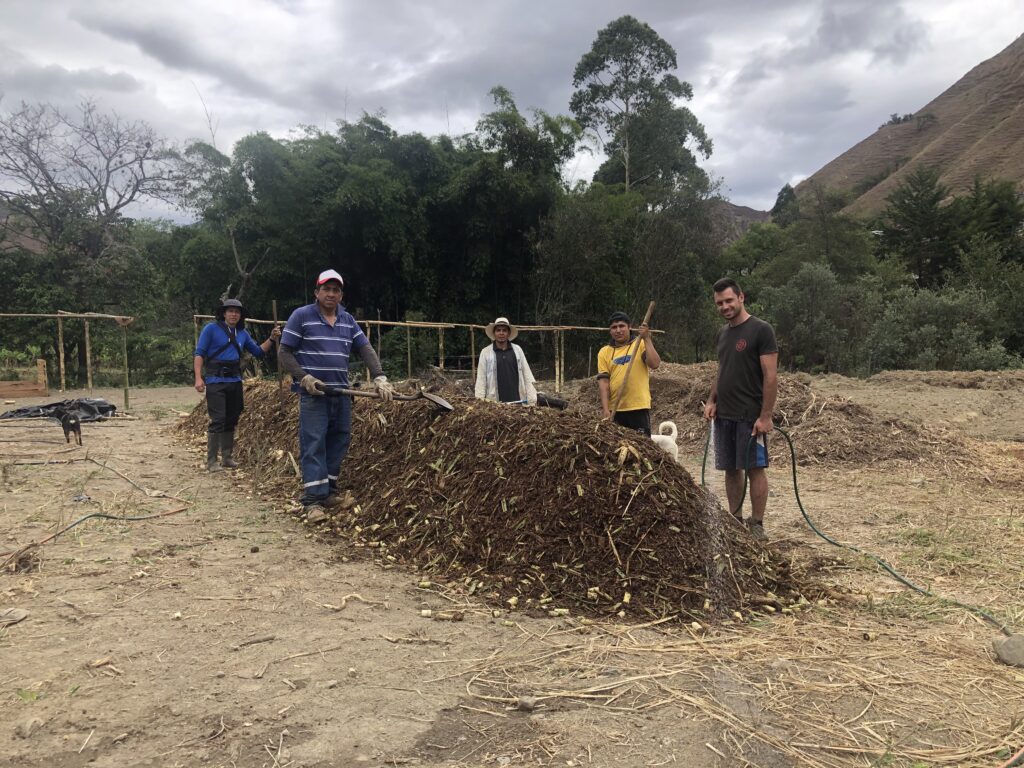
We wanted to make microbe-rich compost, built on the soil food web principles that honor life at every level. We had been promised an exciting donation, a compost turner, from the United States to help us scale up production. When Covid came, that promise dissolved. The borders closed, the machine never arrived, and we were left with our hands, a rented piece of land, and a deep commitment.
So we began by hand.
There were three local workers with me. We turned the piles with pitchforks under the hot sun. We mixed goat manure, chopped plants, peanut shells, and wood chips. We learned to watch for temperature changes, smells, and color. We made mistakes, corrected them, and kept going. Composting by hand became a kind of meditation and it is a science. I completed my Consultancy designation with Dr Elaine’s Soil Food Web School and I realized all I thought I knew about soil health and human health was wrong.
Our gardens came alive. The first plants we grew responded beautifully. Their color deepened, their roots thickened, and their vitality returned. I realized that if you have microbes, you can grow great plants.
We thought we could sell it. But microbe compost is expensive to make. It takes patience, precision, and labor. It is not a product. It is an inoculant, a culture of life. Selling it by the sack did not make sense for most farmers who were barely breaking even.
That was when the shift began. The real purpose was not to sell compost. It was to teach people about soil life itself.
The Abandoned Dormitory Site
A friend came one day and told me about a property for sale just a kilometer from my house. It was the old dormitory used by highway workers years ago. A woman from Loja had owned it for about seven years, and in that time everything had been taken. Toilets, sinks, electrical wires, plumbing, and roofing were all stripped away.
What remained was one hectare of land and a thousand square meters of broken buildings on depleted and destroyed earth.
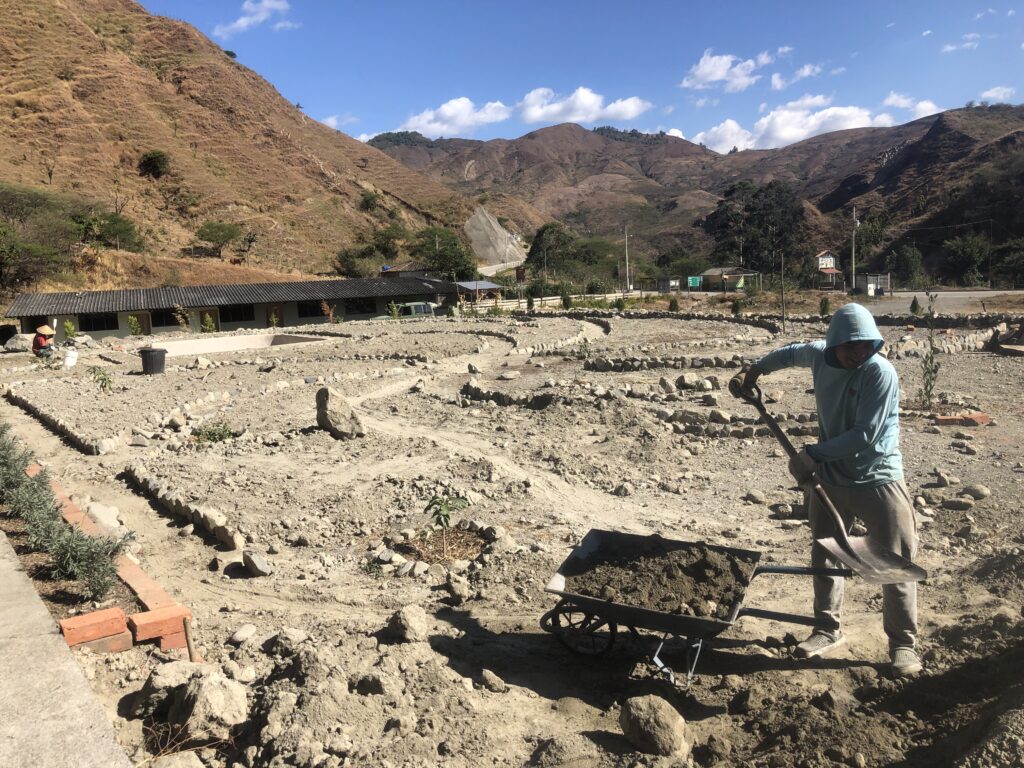
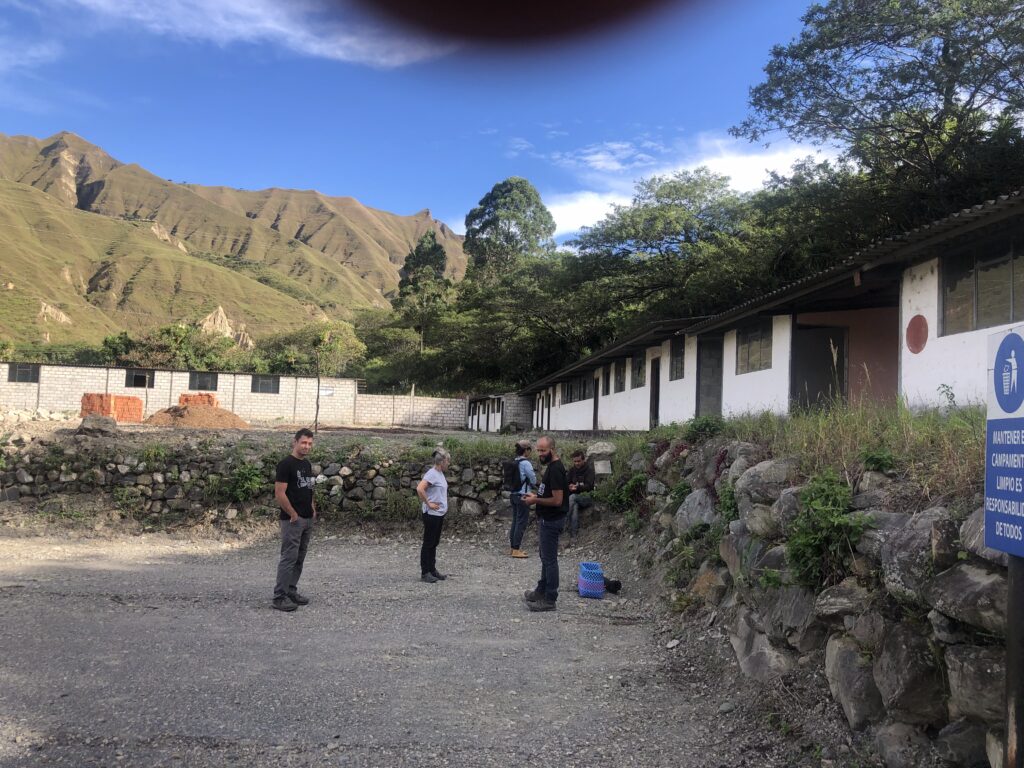
Where others saw ruin, I saw a possibility. I could feel that this land had a story still to tell. I imagined expanding the compost work, growing gardens, and maybe even creating a place for education.
Education. The word felt both heavy and right.
At first I questioned it. Who was I to create an education center? I was still learning every day. But I could see that people needed this. Farmers, children, grandchildren, locals, expacts, travelers, families—everyone needed to understand the connection between the soil beneath our feet and the microbes within our bodies.
So the idea took root.
From Piles To Pages
We continued the composting, and while the plants grew, I began to write. I wrote and wrote and wrote. I wrote about microbes, soil health, the food web, and the human body as a mirror of the land. I wrote about my favourite herbs. Writing became a way to organize what I was learning and to share it. Those writings became manuals. The manuals became books. And the books became the foundation for the courses that would one day support the education center.
It was never about theory. It was about living it, day by day, shovel by shovel, sentence by sentence.
When The Dream Became Real
When I purchased the Project Site, the dream suddenly became reality. It hit me hard. I could see what it could be, but I also saw the mountain of work ahead. It was literally a mountain! My pockets were empty. My schedule was full. My heart was determined.
I worked full-time doing client sessions and Live Blood Analysis reports to fund the restoration. Every dollar paid wages for the team. That was my first responsibility—to make sure everyone got paid every week. There was no income from the Project itself. Only effort.
Friends and visitors offered suggestions. One person said, “You should go to the market in town and sell your products.” So I did. For a couple of months, I set up a little table on market day with my tinctures, salts, teas, and ferments. I loved creating the products, but I soon realized it took three or four days each week to prepare and sell, and my practice already filled the other three or four days and the writing was still a focus. I had officially run out of days.
That was when I decided I needed a plan. A funny, slightly chaotic plan, but a plan nonetheless.
The Steps
Step One: Restore the soil. Because without life in the ground, nothing can grow.
Step Two: Plant the gardens. Let the plants and microbes find each other again and grow food that is nourished and healthy.
Step Three: Create courses for the future. Which meant writing manuals, which became books, which became a small mountain of paper and tea-stained notes.
Step Four: Get the store up and running. People need to see, smell, and taste what the land can make.
Step Five: Make our own essential oils, because distilling the spirit of plants feels like distilling the soul of the land. And, this could be a potential profit maker.
Step Six: Get the equipment, tools, and everything else we forgot we would need. The dehydrators, the blenders, the oil extracters and food processors. The bottles, the bags, the base equipment to make products.
Step Seven: Still trying to remember what that one was. Possibly “sleep.”
And then came Step Eight, which is simply to keep going. Because every time we finish a step, another one appears. I see the future….and this is about self reliance.
The Store And The Café
By July 2025, the store opened. It was small but alive with energy. Shelves filled with handmade tinctures, ferments, vinegars, salts, and teas. Every product was born from the land.
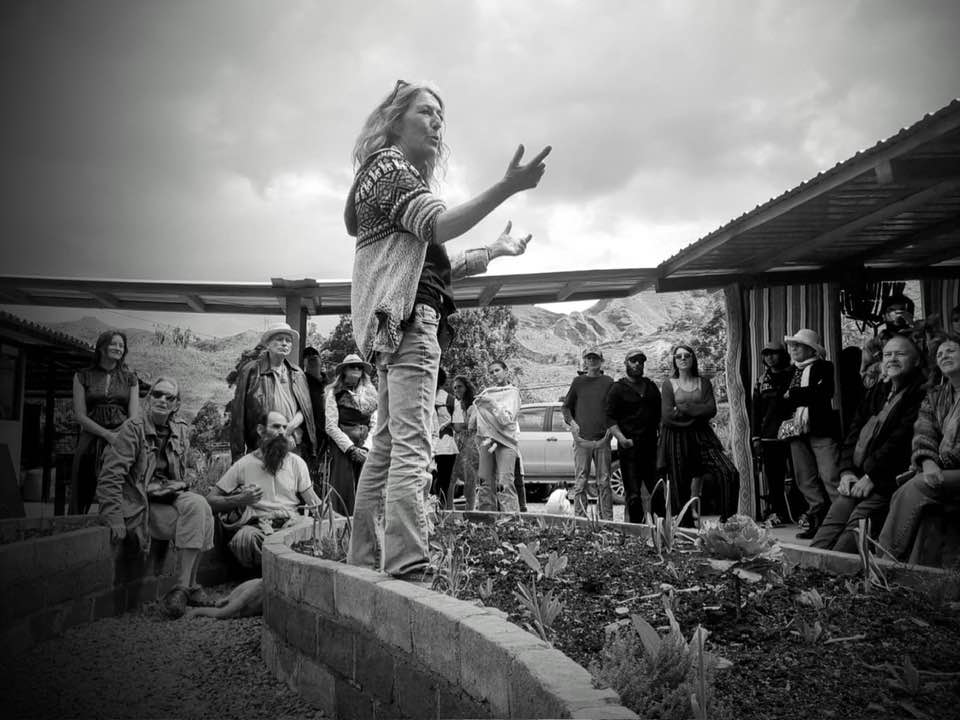
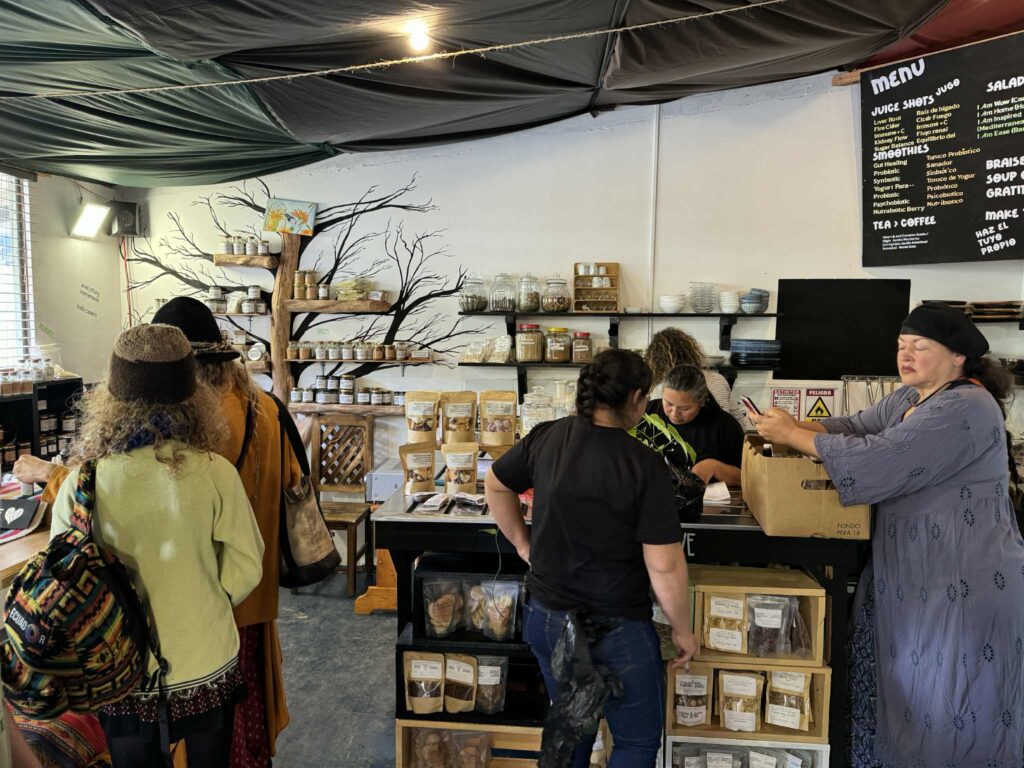
We planned to open the café soon after, but it took more preparation than expected. Finally, in October 2025, the café opened its doors. It became a place of warmth and connection, where homemade food from our gardens was shared with love.
People came hungry and left inspired, I hope. The café is an important bridge between soil and people.
But even that was never the final step.
And The Future
The next dream is to restore the dormitory buildings that once housed eighty men. I envision twenty-five beds and six private rooms with bathrooms to start. The goal is to welcome students, apprentices, retreat guests, and travelers who want to learn and live close to the soil.
Eco-tourism, workshops, apprenticeships, and retreats will form the next phase of Living Ground. The café will serve as a place to nourish these visitors and as a classroom for teaching the art of microbial food and terrain-based living. See, each step is a foundation for the next level.
Learning The Land And The People
Working in Ecuador has taught me more about humanity than any book ever could. What I see as normal is not always normal here. What I find polite may seem strange. What I believe is efficient may appear unnecessary. It is a daily dance of learning. We have different ways of thinking, doing things and approaching life.
I have come to see that division exists everywhere. Every country, every family, every heart carries its own fractures. My work here (anyone’s work on this earth) is not to fix people. It is to assist, to help, to witness something different and better.
The Project Site itself, today, is full of microbes and plants, and I treat them as teachers. Each one has a story or care, patience, and respect. If you rush, you damage the roots of what you want to keep. The same is true for human relationships.
Remembering The Seed
Recently, I realized this was not the first time I dreamed of such a place. Decades ago in Canada, I tried to create something similar at my clinic and herb gardens. The seed was planted then, but the soil was not ready. Now, after years of growing, failing, and learning, that seed has ripened.
Dreams take time to ferment. They need years of quiet growth beneath the surface before they break through. Living Ground is the same dream, matured and ready.
Where We Stand Today
Now the gardens thrive. The compost piles breathe. The café and store hum with life. Visitors wander through, curious and smiling. The education center is forming, not just in the buildings, but in the hearts of those who come here.
Living Ground is still becoming itself. It is not finished, and perhaps it never will be. It is a living organism that grows, teaches, and transforms.
At its heart, it remains simple.
This is a place where soil and soul meet. Where microbes are honored as allies. Where food, health, and healing are woven together.
It began with uncertainty, a rented field, and a promise that never arrived. It grew through sweat, mistakes, laughter, and quiet miracles. It continues to grow because life always finds a way when we work with it instead of against it.
Living Ground is not just a project. It is a reminder that everything good begins small, messy, and alive.
When I look back, I see how we built all of this from absolutely nothing. While we had support to purchase the project site, we have had no money, no investors, no grants. Only hands, faith, and the decision to begin anyway. Every wall repaired, every garden bed dug, every jar on a shelf exists because we chose not to wait for perfect conditions. We used what we had, and what we had was heart, determination, and the belief that the land would meet us halfway.
This story matters because so many people are waiting to begin until they have enough money, knowledge, or certainty. The truth is, you never really feel ready. The soil does not wait for permission to grow. It begins where it is, with whatever seed falls upon it.
Living Ground was built on that same principle. We started with nothing but purpose, and step by step, life responded. To build from nothing is not a struggle against the void. It is an act of faith that what you nurture will one day bloom beyond what you imagined.
And if I have learned anything from all of this, it is that sometimes you only understand the plan once you are already standing somewhere around Step Nine, with your hands in the soil and your heart wide open.
Author’s Note
Living Ground is not only a place. It is an invitation to remember what it means to live in relationship with the earth. What began as compost and curiosity has become a living classroom, café, and sanctuary for microbes, plants, and people alike. Every pile, every plant, every meal is part of the same teaching: that health begins in the soil, and that when we nurture the ground beneath our feet, we nurture the ground within ourselves.
If you ever find yourself in southern Ecuador, come walk the paths, taste the food, meet the microbes, and feel what living soil can do. Living Ground continues to evolve, just as I do, learning daily from the small and quiet teachers of this land. May this story remind you that renewal often begins with what is broken down, and that all of us, in some way, are composting our way toward life.
And the story continues….


