
 Leisha
 Morning and Evening Elixirs For Blood, Liver, Brain and Microbial Balance
When I started to really understand microbiology, I quietly moved most of the strong germ fighting herbs and foods out of my apothecary. I began to see those “kill the bugs” tools as blunt instruments that did not care who they pushed back. That never felt like my way. I am interested in gardens, inside and out. I care about soil, terrain, the gut garden and the relationships between what we call bad, good and everything in between. The world is saturated with germ war thinking, and imho, this is connected to the rise of chronic illness.
So clove drifted off my shelves. It had a reputation for being very strong against microbes and I did not want to add to the constant internal warfare.
Recently, I came across research on clove bud extracts and its main compound, eugenol, and the picture began to shift. Instead of a simple weapon, clove started to look like a regulator of oxidative stress, a supporter of liver and blood, a helper for our own antioxidant systems, and even a possible ally in balancing gut terrain rather than flattening it.
That was enough to make me stop and reconsider.
Out of that rethinking have come two new elixirs that feel much more aligned with the Living Ground way of working.
One is a Morning Elixir in a 250 ml bottle made from clove buds, goji berries and coffee berries.
The other is an Evening Elixir in a 250 ml bottle made from clove buds and goji berries.
Both are slow, water based extractions that are carefully reduced and bottled. They are not essential oils and not a quick teabag dunk. They are concentrated liquids that you take in small amounts.
The Morning bottle is for people who wake with foggy heads, heavy livers and a sense that their blood is a little too thick and slow. Clove buds bring warmth, circulation, digestive spark and powerful antioxidant signalling. Goji berries nourish blood and liver, carry polysaccharides that microbes love, and have a long history as tonics for longevity and vision (MDPI). Coffee berries, the red fruit around the coffee bean, carry chlorogenic acids and other polyphenols that support brain function, microcirculation and insulin sensitivity, with only a trace of caffeine. Together they feel bright and steady rather than jangly. This is not a coffee jolt. It is more like a clearer, grounded waking up.
The Evening bottle is for people whose nights feel noisy on the inside. Restless legs. Buzzing nerves. A body that is exhausted but cannot drop into deep rest. Clove helps warm and relax, supports circulation and eases internal tension. Goji feeds and steadies the blood and fluids that nourish the nervous system. This blend feels like a gentle downshift. It does not sedate. It nourishes and invites the body to let go.
My original view of clove was very narrow. I saw it as a strong, sharp tool, especially nice for tooth pain but much too harsh for daily internal use. In a world already obsessed with killing microbes.
What began to pull it back into the conversation was a series of studies on eugenol, the key component in clove buds. One paper followed rats that were given eugenol by mouth for 15 and 90 days. The researchers looked at antioxidant systems in the intestine. After ninety days, the level of glutathione in the intestinal tissue was significantly higher, and the activity of glutathione S transferases was increased at both time points. They described eugenol as non toxic and protective, and suggested that it helps the intestine clear toxic substances more efficiently.
That is not the picture of a substance that tears up the gut lining. It is a picture of one that strengthens the antioxidant and detox machinery in the tissue where so many microbial conversations take place.
So I did more research. It turns out eugenol nudges one of the body’s main internal “cleanup switches” called Nrf2, which helps turn on many of our own antioxidant defences. Under stress it helps key enzymes like superoxide dismutase, catalase and glutathione work better, and it helps quiet down inflammation that is being stirred up by oxidative stress
Eugenol’s antioxidant role is not just an idea on paper. In one animal study on an inflamed gut, taking eugenol helped the body’s own protective enzymes in the colon work better and lowered signs of oxidative damage and wear in the tissue.
All of this makes clove bud hot water extract look less like a wrecking ball and more like a housekeeper. It helps clear smoke, repair surfaces and keep things from rusting inside, which in turn makes it easier for the right microbes to thrive. That is what led me to bring clove back.
In our Morning blend, that clove antioxidant support is woven together with goji’s bright pigments and long chain sugars, which help protect fats, proteins and DNA and support a steady immune system and healthy blood vessels. Coffee berry adds its own strong antioxidant power with very little caffeine, so it gently supports brain and circulation without pushing the adrenals. Together, the three create a layered field of support that reaches the gut lining, liver cells, blood vessels and brain tissue all at once.
When I think about the liver, I see how quietly fatty change can sit inside bodies that look “normal” on the outside. It is tied in with blood sugar swings, weight gathering around the middle, chronic inflammation and an unsettled gut. In animal studies where a high fat diet was used to create fatty liver, adding eugenol reduced the amount of fat in the liver, the liver tissue looked healthier under the microscope, and blood fats shifted in a better direction. The researchers suggested that eugenol was helping the body handle and move liver fats more wisely through the close conversation between gut, brain and liver.
Other work in metabolic syndrome models shows eugenol improving liver damage and oxidative stress markers when excess fructose is driving fatty change in the liver (Wiley Online Library).
At the same time, goji berries have their own story in liver care. Clinical work and meta analyses suggest that goji preparations can improve lipid profiles, reduce abdominal fat and support cardiovascular markers in humans (PMC). When I put clove and goji together in a water base, I see them as a pair that lightens the liver load. Clove clears some of the oxidative smoke and congestion. Goji feeds and restores. In the Morning elixir, coffee berry joins this pair. Coffee fruit extracts support brain and metabolic health and add another dimension to the liver and vessel picture, again in a gentle, polyphenol rich, low caffeine form (PubMed).
I always keep in mind that these are animal and early human data, not giant definitive trials. Still, the pattern is consistent enough for me to feel comfortable placing clove based blends in the category of daily liver and metabolic allies.
In live blood work, I often see the story of circulation. Red cells stuck in stacks, plasma that looks heavy, platelets that seem a little too clingy. Anything that improves flow without forcing the system is worth attention. In animal models, eugenol has been shown to lower total cholesterol and LDL, reduce atherogenic indices and improve liver fat and vessel health (. Goji contributes by improving triglycerides and cholesterol patterns in humans and by supporting heart related markers in controlled trials.
The brain piece comes in strongly with coffee berry. Whole coffee cherry extract, which is essentially a refined form of coffee fruit, has been studied in older adults with subjective cognitive decline. A randomized controlled trial found improvements in reaction time and reductions in cognitive errors, with measurable changes in brain activity in regions involved in decision making and attention.
So in the Morning Goji Coffee Berry Clove Elixir you have clove gently moving blood and supporting vessel tone, goji feeding microcirculation and bringing eye and brain loving pigments, and coffee berry polishing attention and helping tiny vessels in the brain deliver what they need.
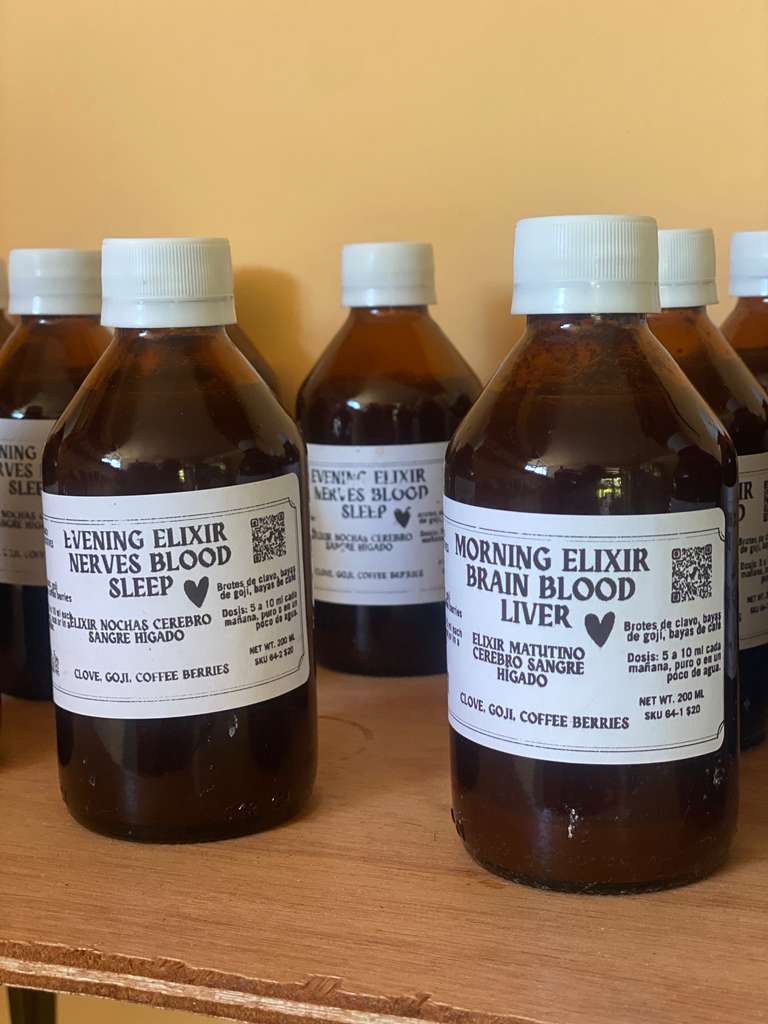
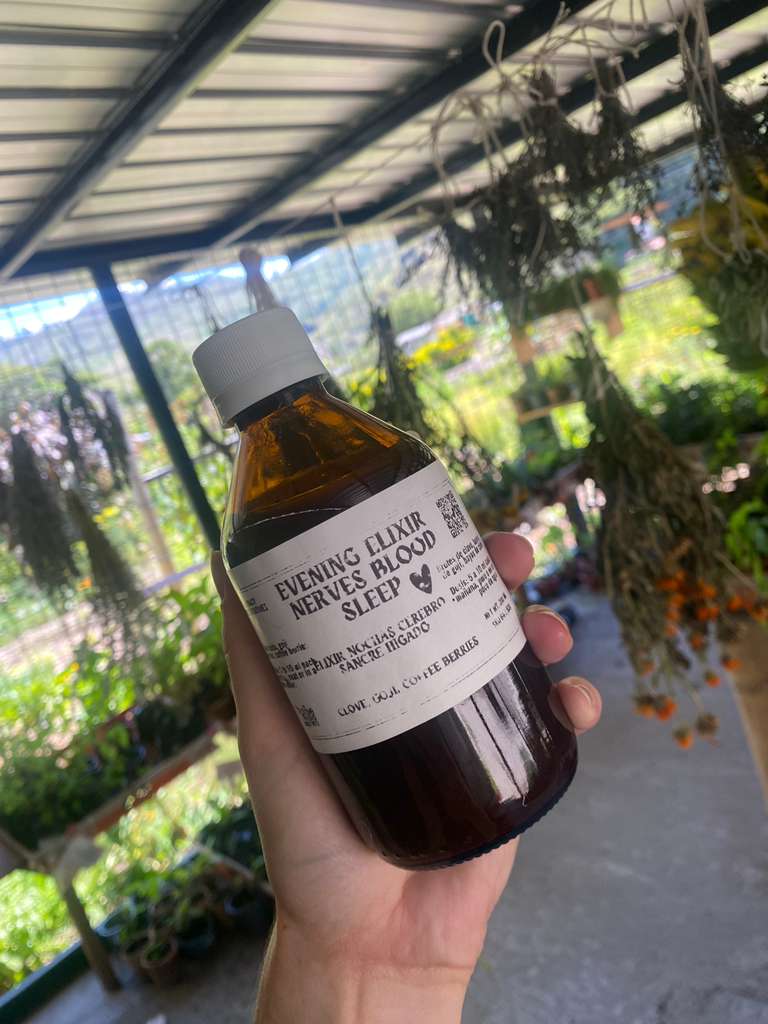
In the Evening Goji Clove Elixir, the absence of coffee berry softens the blend. Clove helps restless legs and background agitation unwind. Goji gives the nervous system something substantial and nourishing to rest into so that sleep can deepen.
I stay cautious about big promises, but it is worth noting that some research suggests eugenol can help protect our genetic material under stress. In simple terms, it seems to act as a strong antioxidant that can lessen everyday wear and tear on DNA and may even support the body’s own repair processes when cells are challenged.
At the same time, laboratory work shows that when eugenol is used in very high concentrations or under harsh conditions, it can flip and become irritating or damaging to certain cell lines. That dual nature reminds me to stay within human scale doses and to work with slow, water based preparations rather than concentrated oils or heroic, one time blasts. Inside a blend with goji and coffee berry, and used as a daily, food like ally, clove feels firmly on the side of protection and repair.
For dosing, there is a wide safety guideline that a person can consume up to about 300 milliliters of clove bud hot water extract per 50 pounds of body weight per day when it is prepared as a simple water decoction. That is a very high ceiling, far above what I see as a daily human rhythm.
Inside that window, I use much smaller amounts.
For the Morning Goji Coffee Berry Clove Elixir, most adults with no specific contraindications can take one to two tablespoons in a little water, once or twice in the first half of the day.
For the Evening Goji Clove Elixir, one to two tablespoons in warm water in the late afternoon or evening is usually enough. Very sensitive people can begin with teaspoon doses. These blends are not meant as a short term course that you blast through. I see them as companions that sit beside real food, ferments, mineral rich broths and time with hands in soil.
Even with reassuring research, I stay on the cautious side with clove based blends. I do not recommend these elixirs for anyone with epilepsy or seizure based disorders, children under about twelve years of age or under roughly forty five kilograms or one hundred pounds, pregnant women or nursing mothers. There are reports and traditional cautions that high exposures to clove oil and eugenol can lower seizure threshold in developing or sensitive brains. Although these products are water based and much gentler than oils, I prefer to keep them for fully developed nervous systems.
Under everything, I come back to soil.
Clove trees, goji shrubs and coffee plants all live within webs of fungi, bacteria, insects, roots and weather. Their chemistry is a direct reflection of those relationships. Clove grows where tree roots talk with mycelium. Goji sits in beds that remember river waters and mineral shifts. Coffee ripens in mountain soils under the filter of shade trees.
When we drink their slow water extracts, especially in blends like these, we are not simply taking isolated molecules. We are drinking condensed stories of ground and climate and microbial cooperation. Inside us, those stories move through the gut, where our own microbes reshape them. They signal through nerves and immune cells to liver and brain. They influence how our cells handle oxidation, repair, inflammation and flow.
I once thought clove did not belong in that conversation. Now, in the company of goji and coffee berry, I see it as part of a trio that can help re weave a tired terrain. These Morning and Evening bottles are my way of bringing that updated understanding out of the lab and back into a kitchen, a garden and a living, breathing human body.
These Morning and Evening Elixirs are now bottled at Living Ground in 250 ml glass bottles as part of our terrain based work at Suelo Vivo and the Gratitude Café. If you would like to sit with this story, explore the research links, or find out how to bring a bottle home.
References
Vidhya N, Devasena T, Karthikeyan S. Antioxidant effect of eugenol in rat intestine. Indian Journal of Experimental Biology. 1999. Link: https://pubmed.ncbi.nlm.nih.gov/10865886/ (PubMed)
Damasceno R O S et al. Anti Inflammatory and Antioxidant Activities of Eugenol. Pharmaceuticals. 2024. Link: https://pubmed.ncbi.nlm.nih.gov/39598416/ (PubMed)
Li H et al. Eugenol alleviated nonalcoholic fatty liver disease in rat via a gut brain liver axis involving glucagon like peptide 1. Archives of Biochemistry and Biophysics. 2022. Link: https://pubmed.ncbi.nlm.nih.gov/35508252/ (PubMed)
Damasceno R O S et al. Anti Inflammatory and Antioxidant Activities of Eugenol: An Update. 2024. Link: https://www.researchgate.net/publication/385773306_Anti-Inflammatory_and_Antioxidant_Activities_of_Eugenol_An_Update (ResearchGate)
Vidhya N et al. Antioxidant effect of eugenol in rat intestine. PDF copy. Link: https://scispace.com/pdf/antioxidant-effect-of-eugenol-in-rat-intestine-2etffq73nq.pdf (SciSpace)
Robinson J L et al. Neurophysiological Effects of Whole Coffee Cherry Extract in Older Adults with Subjective Cognitive Impairment. Antioxidants. 2021. Link: https://pubmed.ncbi.nlm.nih.gov/33498314/ and open access: https://pmc.ncbi.nlm.nih.gov/articles/PMC7909261/ (PubMed)
Antonelli M et al. Health Promoting Effects of Goji Berries Lycium barbarum. 2024. Link: https://www.mdpi.com/2673-9976/40/1/1 (MDPI)
Zeng X et al. Effects of Lycium barbarum on Lipid Profiles: A Systematic Review and Meta Analysis of Randomized Controlled Trials. 2023. Link: https://pmc.ncbi.nlm.nih.gov/articles/PMC10545344/ (PMC)
Kakici I, Gezer C. Goji berry Lycium barbarum consumption is related with decrease in serum lipids and body fat in healthy individuals. 2025. Link: https://journals.sagepub.com/doi/10.1177/18785093251382509 (SAGE Journals)
Rompelberg C J et al. Inhibition of rat, mouse, and human glutathione S transferase by eugenol and its oxidation products. Chemico Biological Interactions. 1996. Link: https://pubmed.ncbi.nlm.nih.gov/8620581/ (ScienceDirect)


