
 Leisha
 We talk about “B vitamins” as if they are a single substance you can swallow, measure, or fix with a pill, but in the body they behave more like a living network.
Vitamin B is never just one thing, and that is where the misunderstanding usually begins. They are a family, a cooperative system, a relay team. Each one has a role, each one hands something off to the next, and none of them function well in isolation. They are water-soluble, fast moving, deeply involved in metabolism, nerves, mood, blood, and energy, and they are constantly being used, recycled, lost, and rebuilt. This tells us something fundamental.
These are not storage vitamins. They are daily relationship vitamins. They reflect how well the body is receiving, processing, and participating in nourishment, not just how much is coming in.
When people ask what the Bs actually are, I usually describe them as the helpers that allow food to become life. None of these act alone. If one falters, the whole system compensates poorly, and the symptoms rarely point neatly to a single vitamin. The body simply feels tired, overwhelmed, foggy, brittle, or emotionally thin.
- B1 helps turn carbohydrates into usable energy.
- B2 and B3 are central to cellular respiration, how cells breathe and generate fuel.
- B5 supports adrenal function and stress response.
- B6 is deeply involved in neurotransmitters and amino acid metabolism.
- B7 supports fat metabolism, skin, hair, and cellular signaling. B9 governs cell division, growth, and repair.
- B12 ties directly into nerve integrity, red blood cell formation, and methylation.
B12 gets the most attention because when it is low, the signals are loudl fatigue that rest does not fixm tingling, numbness, memory lapses, mood instability, anxiety that feels unanchored.
But B12 is not absorbed casually. It has one of the most complex uptake pathways of any nutrient we work with. It must be released from food by stomach acid, bound to protective proteins, escorted by intrinsic factor, received by a healthy small intestine, and finally integrated with the help of the microbiome. If digestion is weak, if bile flow is poor, if the gut lining is inflamed, or if microbial diversity is depleted, B12 can be present in the diet and still unavailable to the body.
This is where the microbiome becomes central, not optional. Certain microbes actively participate in the production of B vitamins. Others transform them into active forms. Others maintain gut barrier integrity so absorption can even occur. The colon itself can become a site of B vitamin production when the microbial ecosystem is diverse and properly fed. This means B vitamins are not simply something you ingest. They are something you cultivate. They are grown inside you through digestion, fermentation, mineral balance, bile flow, and microbial cooperation. This mirrors the soil. Just as plants cannot access minerals without soil microbes, humans cannot access vitamins without internal ecosystems that know how to unlock them.
Lactobacillius plays a key role here and is often misunderstood. Lactobacillius is not just a word on a supplement label. It is part of the working crew inside a living gut. Certain Lactobacillus species are directly involved in the synthesis of B vitamins including B12, folate, riboflavin, and B6. Others support the environment that allows those vitamins to be absorbed and retained. They help regulate pH, interact with bile acids, reinforce gut lining integrity, and communicate with immune and nervous system pathways. They also participate in fermentation, producing short-chain fatty acids that nourish the gut lining itself. When Lactobacillius populations are healthy, the gut becomes more receptive. When they are depleted, nutrients pass through instead of landing.
This is why I do not see B12 deficiency as an intake problem. You can swallow B12 every day and still be functionally low if the microbial community that participates in B metabolism is missing or underfed. Without that internal collaboration, vitamins remain strangers to the cells that need them. This is also why the Bs are often called the “happy vitamins.” They are deeply involved in neurotransmitter pathways that regulate mood, resilience, and nervous system tone. Serotonin, dopamine, GABA, acetylcholine all rely on B vitamins as cofactors. When Bs are depleted, the nervous system becomes brittle. Stress feels louder. Recovery takes longer. Emotional buffering disappears. When Bs are restored through proper uptake, people often describe feeling more like themselves again, not euphoric, just steadier, clearer, more resilient.
Bs deplete easily because modern life is demanding. Stress burns through them quickly. Blood sugar swings increase demand. Inflammation raises turnover. Alcohol drains them aggressively. Poor digestion limits release from food. Low stomach acid blocks early steps of absorption. An imbalanced microbiome reduces both production and activation. Because they are water-soluble, whatever the body cannot use immediately is excreted. This is where supplements often enter the conversation, and this is where I tend to be direct. Pills are often a waste of money. They flood the system without repairing the uptake pathways. Bright yellow urine is not success. It is evidence of loss. The body is saying thank you but I cannot use this. Without digestion, microbial participation, and true cellular demand, vitamins have nowhere to land.
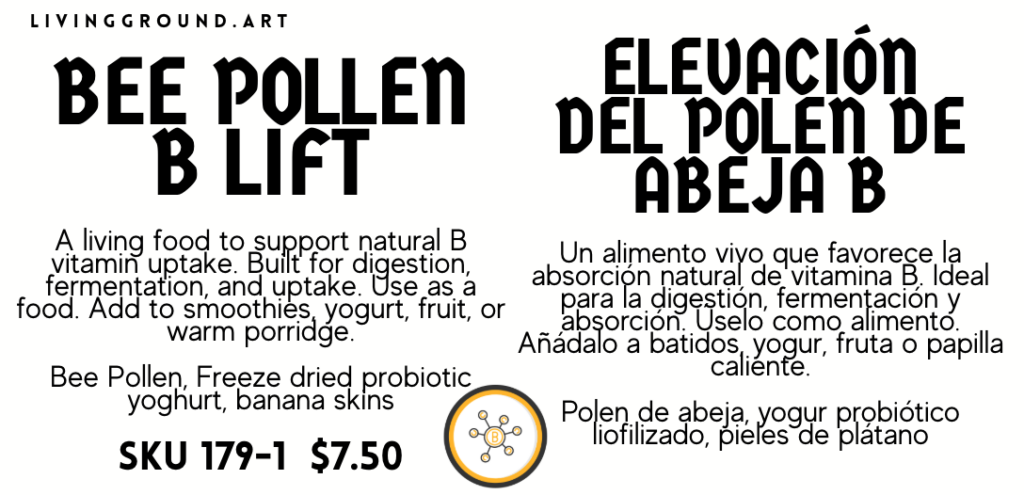
This is why I am drawn to food-based, living sources of B vitamins, and bee pollen is one of my favorites. Bee pollen is not just a nutrient source. It is a biological package. It contains naturally occurring B vitamins, trace minerals, enzymes, and microbial companions that evolved together. It is predigested by bees, which increases bioavailability, and it arrives with cofactors that support uptake rather than overwhelm the system. Bee pollen feeds the human body and the microbial body at the same time. It is gentle, intelligent nourishment.
The product we have made with bee pollen, freeze-dried banana skins, and probiotic yogurt reflects this understanding fully.
Banana skins are rich in resistant fibers that feed beneficial microbes involved in fermentation and B vitamin synthesis. Freeze drying preserves nutrients and structure without stripping away the living intelligence of the food.
Probiotic yogurt introduces active cultures that participate directly in digestion and vitamin metabolism.
Bee pollen ties it together by offering B vitamins in a form the body recognizes and welcomes. This is not supplementation. This is cultivation. It is feeding the ecosystem so it can do the work it already knows how to do.
https://livinggroundstore.spread.name/product/vitamin-b-helper
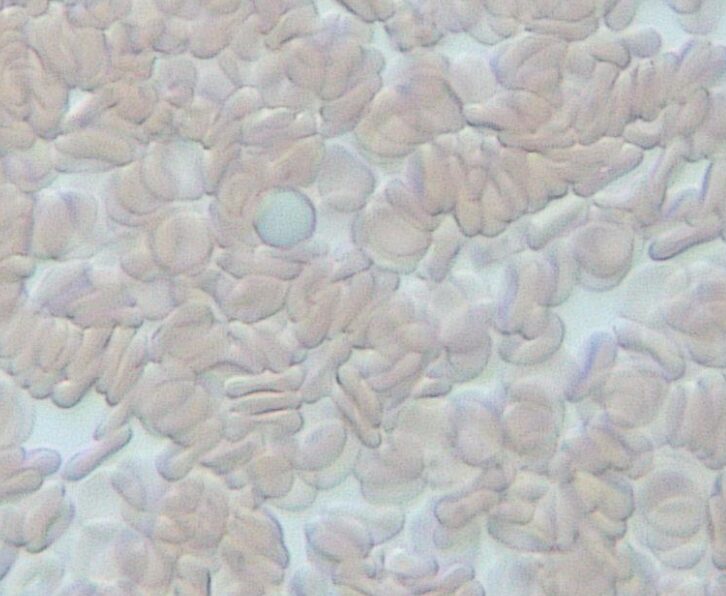
When you look at live blood through the lens of B vitamin stress, you are not looking for a single dramatic marker. You are reading a pattern, a mood, a behavior of the blood. B vitamins do not leave one obvious fingerprint. They influence how cells are built, how they move, how they communicate, and how resilient they are under stress. So what you see is cumulative and relational, not diagnostic in the conventional sense.
One of the first things that often shows up when B12 or folate pathways are struggling is red blood cell shape and consistency. Instead of smooth, round, flexible cells that move easily past one another, you may see cells that vary noticeably in size or shape. Some appear slightly swollen, others smaller or irregular. This reflects impaired cell division and maturation, which is directly tied to folate and B12 function. Red blood cells are formed in the bone marrow through rapid division, and when B vitamins are not available or not usable, that process becomes sloppy. The blood carries the evidence.
Membrane integrity is another big clue. Healthy red blood cells have supple membranes that flex and bounce as they move through plasma. When B vitamins are depleted, especially alongside mineral imbalance and oxidative stress, membranes can appear thin, stressed, or uneven. Cells may look dull rather than luminous, less vibrant, less alive. This is not about oxygen alone. It is about the biochemical scaffolding that keeps the cell functional, and B vitamins are deeply involved in maintaining that scaffolding.
Movement is just as important as shape. In blood with strong B vitamin uptake, red blood cells tend to move freely, gently repelling one another, creating space, flowing with ease. When Bs are low, movement often slows. Cells may appear sluggish, hesitant, or prone to stacking or clumping. While rouleau formation has multiple influences, poor B metabolism can contribute by altering membrane charge and flexibility. The blood does not circulate with the same confidence. It looks tired.
Another subtle but telling sign is overall vitality of the field. In well-nourished blood, there is a sense of activity, communication, responsiveness. In blood under B vitamin stress, the field can look quiet, flat, or heavy. White blood cells may appear less responsive or more strained, reflecting immune stress that often accompanies poor methylation and nervous system load. Again, this is not a single marker. It is a system under-resourced.
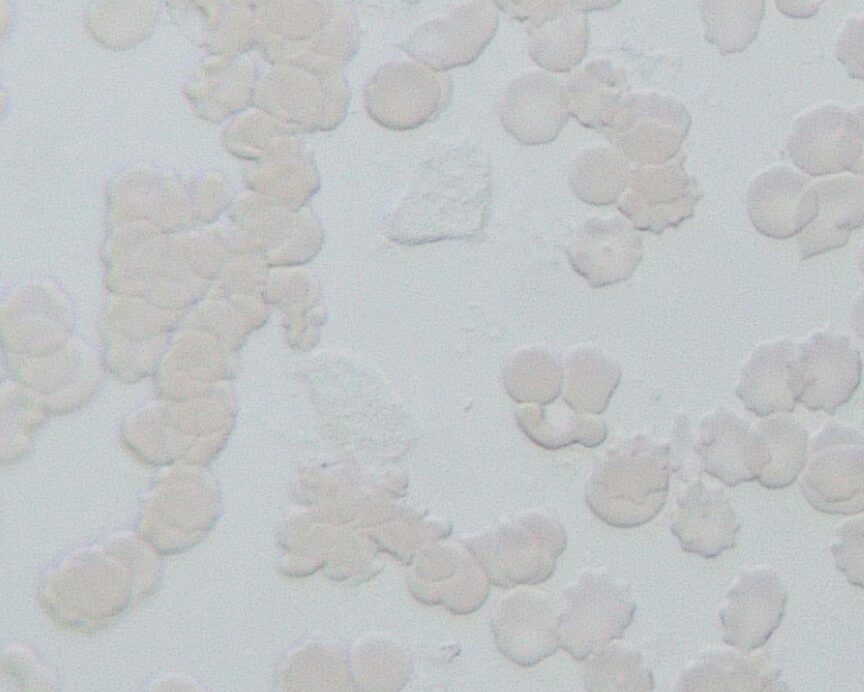
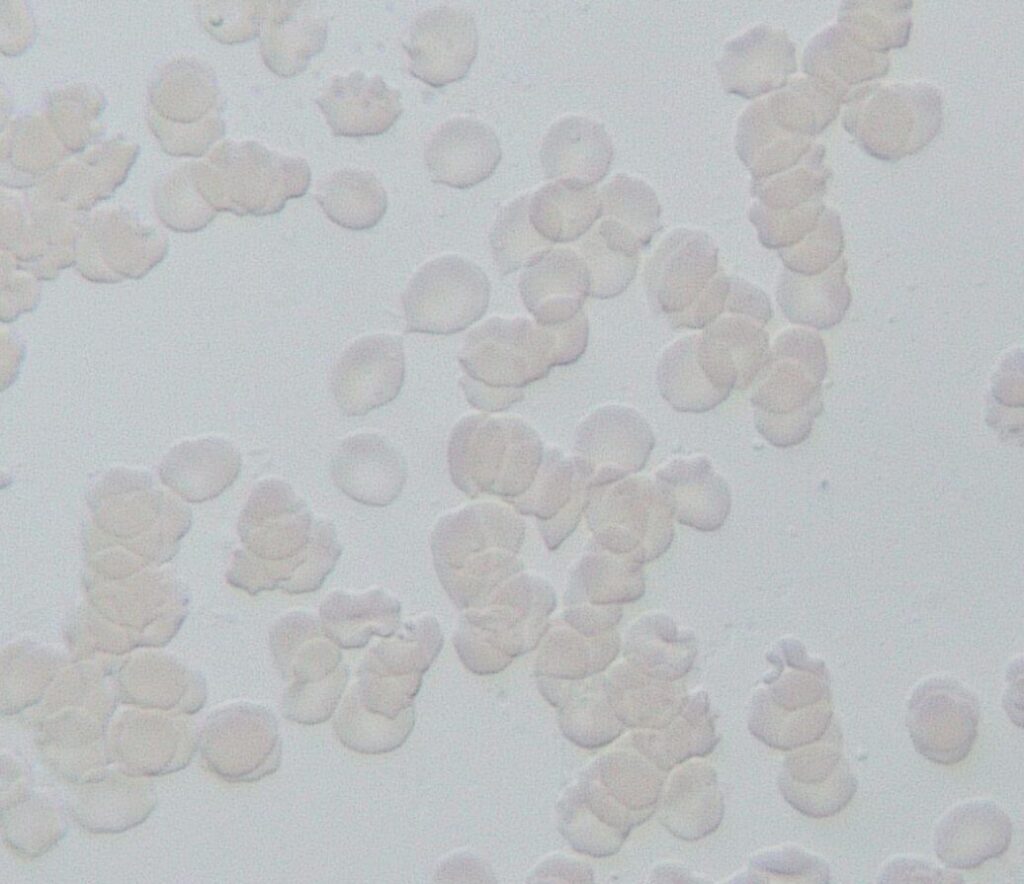
What is important to understand is that these patterns do not mean “you need a B supplement.” They mean the body is not building or maintaining cells optimally. They point back upstream to digestion, microbial participation, mineral balance, and nervous system regulation.
Live blood shows you the outcome of uptake, not the promise of intake.
This is why live blood pairs so well with a microbiome-centered understanding of B vitamins. When you support Lactobacillus populations, improve fermentation, increase resistant fibers, and restore digestive rhythm, these blood patterns often soften over time. Red blood cells become more uniform. Membranes regain flexibility. Movement improves. The field looks brighter, more alive. You are not forcing change. You are allowing the body to rebuild itself correctly.
It is also why pills so often disappoint. They may temporarily shift symptoms, but they rarely change what you see under the microscope unless the terrain itself changes. Live blood does not reward shortcuts. It responds to ecology.
When you use live blood in this way, it becomes a teaching tool rather than a diagnostic weapon. It shows people that nourishment is not about swallowing nutrients. It is about receiving them. B vitamins are not taken, they are integrated. And integration is always a whole-body, whole-biome conversation.
For me, vitamin B is not a pill story. It is a digestion, microbial, soil and gut story. When the gut is alive, diverse, and fed with real food, the Bs show up. When digestion is rushed, inflamed, or depleted, they quietly disappear.
When people say they feel like themselves again after restoring their Bs, I think what they are really saying is that their internal community is working together again. Energy flows. Signals land. The body listens and responds. That is not chemistry alone. That is ecology.


