
 Leisha
 This is a little synopsis of the story behind Living Ground and a somewhat vulnerable sharing of my own journey.
It is not the whole story, nor could it ever be. Like everyone, I carry chapters that are still unfolding, questions that remain unanswered, and experiences that are difficult to put into words. I share this simply because it feels important to remember that behind every project, garden, meal, and every vision are very human beings carrying both imperfections and hope and continuing to show up anyway.
Living Ground did not emerge from people who had everything figured out. It emerged from human beings who continue to stumble, heal, learn, and discover what it means to live and work more wholeheartedly together.
I remember, about twenty years ago, having what appeared from the outside to be a comfortable life. In Canada, I had a beautiful house, a successful practice, all the gadgets and conveniences, and many of the things that are supposed to make a person feel secure. But inside, I was unsatisfied and I did not yet have the language to understand that what I was missing was not more comfort or success. What I was missing was wholeheartedness, the feeling of being fully inside my own life instead of performing a version of it that looked acceptable from the outside because the programs were deeply rooted in me.
I was in a marriage that had lasted more than twenty years. It was a marriage of ups and downs. While it was a good relationship in many ways, because how can you stay with someone that long and it not be nourishing in some way, it was also a codependent-addict connection. Spending two decades with someone creates a deep and complicated bond, and we had also become strangers in many ways. We were moving apart quietly.
I was also carrying a dream that I could see with remarkable clarity. I had a vision that lived in me like a landscape I had not yet found. I knew there was another way to live. I knew there was something I was being called toward, something rooted in land, healing, plants, food, microbes, and the deeper intelligence of life itself. Yet no matter how clearly I could see it, I could not seem to create stability around it. I felt trapped.
I also felt it was selfish of me to complain about life. The house was there, the work was there, the responsibilities were being met, and everyone assumed I was fine because the structure appeared to be holding. Yet inside, something was quietly collapsing. I remember feeling tired and somehow hopeless, but it was not the tiredness of staying up too late or working too many hours. It was the tiredness of living beside myself.
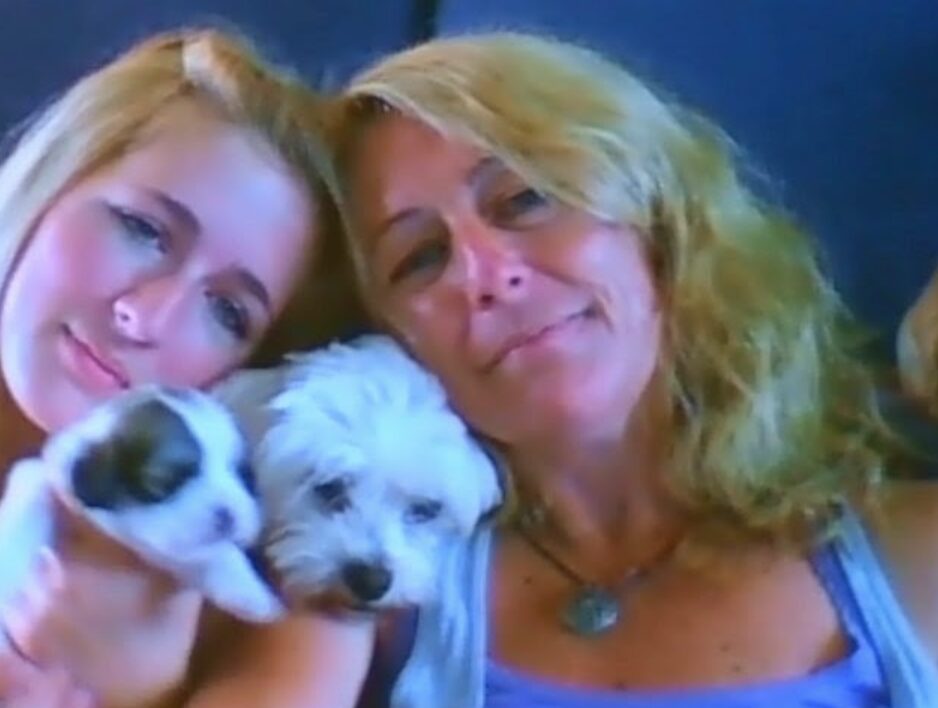
For years, I thought I simply needed rest, a holiday, a weekend away, a good sleep, a little more time to myself, or some kind of reset. But that kind of tiredness does not answer to sleep. I do not think many of us are exhausted because we do too much, at least not entirely. I think we are exhausted because we spend too much of ourselves on things that do not feed us. We pour a whole life, a real life, the only one we have, into roles, expectations, responsibilities, and systems that may look perfectly reasonable from the outside while the life we were actually shaped for stands just off to the side, waiting.
The body knows. Ha, so much it knows. The body always knows first, long before the mind will allow itself to know. It simply begins, quietly and year by year, to withdraw its yes. Our energy fades, our joy becomes harder to reach, and our patience thins. We begin looking for comfort, distraction, or escape, not because we are weak, but because some part of us knows we are living out of alignment and cannot keep pretending without consequence.
Then, amazingly, my husband entered a relationship with a woman I had considered a soul sister. Boom! Something in me knew the path I had been walking had ended. I recognized the truth my body could no longer ignore. The sadness stopped whispering. It tore open the curtain and said, “Look. This is where you are. This is what has become of this life. Do you want to hold this together still?”
Six months later, I found myself whittling down an entire life into two suitcases and leaving almost everything I had known. The future was completely unknown. Most of my friends and family assumed I was in some kind of midlife crisis, and perhaps I was. It was a crisis, but it was also the crack breaking open so the light could come in. It was a crisis of truth, identity, and belonging, and of finally admitting that the life I had been living could no longer contain the life that was trying to emerge through me.
I landed in Ecuador. Hard! I found a remote valley in the Southern Andes and literally set up camp. I had little money and very few things, but I had peace. It was not an easy peace, and it was not romantic in the way people sometimes imagine when they hear stories about leaving everything behind. It was raw, practical, muddy, uncertain, and full of very real challenges. But beneath all of that, there was something alive in me again. I could feel myself breathing in a way I had not breathed for years.
From that place, I began to create. I made gardens, pathways, a treehouse, and an outdoor kitchen with a wood stove where I could cook. I began learning the land through my hands, through the soil, through the plants, and through the quiet intelligence of a place that was teaching me how to listen again.
Although not the same physical location, that was the beginning of what would eventually become the Living Ground Project. It was an inoculation time, a time of learning, feeling myself again, and the beginning of the walking prayer I now understand I had been called into.
There are so many ways we are taught to numb that knowing. Pour the wine because it is Friday and you earned it. Put on the show, scroll the phone, order the thing, keep busy, stay entertained, and fill every empty space so the truth does not have room to rise. Then there are the softer versions, the ones that sound more conscious. Take the rest day, book the spa, go on the retreat, download the meditation app with the little rain sounds, and recharge yourself so you can return on Monday and continue giving your life to the very thing that keeps emptying you out. Make it make sense. I cannot.
There is a story that the poet, philosopher, and author David Whyte tells in his book Crossing the Unknown Sea. Much of Whyte’s work explores the relationship between work, meaning, courage, and the deeper callings that quietly shape our lives. In this story, he was younger and completely run into the ground, carrying that exact bone-tiredness. He was sitting with an old friend, the Benedictine monk Brother David Steindl-Rast, and asked him to speak about exhaustion. The monk did not give him the answer most of us expect. He did not say to sleep more, work less, or take a holiday. He looked at him with fierce compassion and said that the antidote to exhaustion is not rest. The antidote to exhaustion is wholeheartedness.
When I first read that, I had to stop because something in me knew it was true. It said that this tiredness was never simply a fuel gauge. It was not just a tank that needed refilling. It was closer to grief. It was the ache of a heart that had only been allowed to show up halfway. We are not always worn out from giving too much. Sometimes we are worn out because the part of us that came here to offer our walking prayer, our ministry, the unique expression of life that only we can bring, has not been allowed near the center of our lives.
One of the deepest heartbreaks of my life is the estrangement I am experiencing, especially because it has also meant not really knowing my granddaughter or being involved in her life. Today, it is quite epidemic. Many parents carry this kind of experience quietly (because there is nothing we can do), and it is difficult to explain because the child is still alive, the love is still ther, and there is a distance you cannot simply fix by wanting it healed or resolved. So, the answer is acceptance.
This part of my story is not unique. Estrangement has become remarkably common. I believe the powers that be have intended families are fragmented. Whether intentional or simply a consequence of the systems we have built around ourselves, we are increasingly disconnected from family, community, land, and belonging, and disconnected people are far easier to keep fearful, distracted, exhausted, and endlessly consuming.
With this experience and losing my partner to cancer, grief began to take my whole life with it. I have had to learn that I cannot live from that wound, no matter how much it hurts. I’ve had to pick up my socks, stand straight, and move deeper into my own wholeheartedness. Grief does not disappear, but staying still would strip me of my walking prayer. It slowly robs you of your aliveness and your ministry.
This has been one of the harder teachings of my life. I am finding myself and living my life despite the heartbreak, not in denial of it. I can love, grieve, pray, keep the door of my heart open, and still continue walking. I can honour the ache without letting it become the whole story. In many ways, this too is part of the same lesson. Wholeheartedness is not the absence of pain. It is the decision not to abandon your own life because pain has entered it.
There is also something powerful in watching the next generation make their own choices. My daughter, who has been estranged for 5 plus years and her family returned to Ecuador to follow their own hearts and calling. While I do not know details, I can only assume in their own way, they walked again, as I once did, toward something deeper. They too began searching for their mana and walking ministry, that living force, that inner authority, that sense of aliveness and purpose that calls each of us to become more fully ourselves.
When we do not live our walking prayer, it does not sit quietly on a shelf waiting for a better year, a freer season, the children to grow up, or the finances to soften. It changes. Like milk left out, the gifts we do not offer externally turn sour. Over the years, that can become tiredness. Beneath that tiredness something heavier can begin to grow. I have seen it in good people, and I have felt it in myself. It is a low, simmering resentment that is hard to admit because it is really grief wearing a harder protective face.
I lived years like that, in a life that worked from the outside but did not feel fully alive inside me. I was competent, responsible, and functioning, which was perhaps the most dangerous part because nobody could easily see what was happening. There was no dramatic collapse, only a slow dimming. I began placing my own aliveness into the category of “one day.” I would think, “when things settle down,” or “when there is more time,” or “when it is finally safe to begin.” But life rarely settles down on its own, and “one day” is where many dreams quietly go to starve.
I now understand this through the same lens how nature has taught me. The soil, plants, microbes, and living systems. A tree can survive in the wrong place for a long time, but survival is not the same as thriving. If the soil is depleted, compacted, or lacking the living relationships that allow roots to communicate, receive, and exchange, the tree may still stand, but its vitality begins to change. Leaves dull, growth slows, resilience weakens, and the whole organism begins to speak in symptoms. Human beings are not separate from this. We also need the right conditions, the right relationships, the right nourishment, and the right inner ecology to live from our full expression.
That remote valley in Ecuador became living soil for me. It did not fix my life in some neat and instant way, but it received me differently. It asked me to participate. It asked me to notice the rain, the insects, the compost, the roots, the fungi, the animals, the fire, the food, and the invisible relationships that make life possible. It taught me that healing is not a performance and that becoming whole is not the same as becoming comfortable. Sometimes becoming whole begins when everything familiar falls away and we are left with the simple, terrifying, holy question of what wants to grow now.
Perhaps this is also the right place to say something about Living Ground because people often arrive and see the gardens, the pathways, the café, the apothecary, the workshops, the flowers, the projects, and the vision that is slowly taking shape. They see people working, laughing, planting, building, teaching, and serving. They see beauty and purpose, and sometimes they imagine that the people creating it all must have somehow figured life out.
We have not figured it out. Underneath what you see are human beings carrying very real lives. There are stories of heartbreak, loss, estrangement, uncertainty, financial worries, disappointments, health challenges, and dreams that have taken much longer than we thought they would. There are people who have left families and countries behind, people searching for belonging, people carrying grief, and people who are still trying to understand who they are and what they are here to do.
I am one of those people, and the people working beside me are those people too. Living Ground was never meant to be a place created by people who have arrived. It was always meant to be a place where people continue arriving. It is a place where imperfect human beings can gather and participate in something meaningful while carrying their own unfinished stories.
Some days are beautiful and inspiring. Some days are difficult and we misunderstand one another. Sometimes projects fail, money feels tight, emotions sit close to the surface, and someone is carrying a burden that nobody else can see. Yet people continue showing up. We continue planting gardens, cooking meals, building pathways, teaching workshops, washing dishes, making compost, sharing stories, and helping one another.
To me, that is wholeheartedness. Wholeheartedness is not having your life perfectly organized. It is not being free from grief or having all the answers. It is showing up anyway. It is continuing to plant gardens while your heart still hurts. It is cooking meals for others while you are still learning how to nourish parts of yourself. It is choosing to build relationships across differences in culture, language, age, and experience because you believe something beautiful can emerge when people gather with sincerity and purpose.
I have watched Ecuadorians and foreigners work side by side, often coming from entirely different backgrounds and carrying completely different stories. I have watched people who would probably never have met under ordinary circumstances sit together at the same table, share food, exchange ideas, laugh together, and slowly begin seeing one another not as categories but as fellow human beings.
Every living ecosystem teaches the same lesson. Healthy systems are built upon relationships. Forests are networks of reciprocity. Soil functions because countless organisms exchange resources and communicate with one another. Nothing truly thrives in isolation, and perhaps human beings are not so different.
Maybe creating a better world does not begin with perfection, agreement, or having finally healed every part of ourselves. Maybe it begins with wholehearted people deciding to keep showing up, to keep building, to keep planting, to keep feeding one another, to keep listening, and to keep creating spaces where people can remember that they belong to something larger than themselves.
That is what Living Ground is becoming. It is not perfect. It is not finished. Neither are we. It is simply a group of human beings, each carrying our own stories and struggles, choosing every day to participate in a walking prayer that says another way of living together is still possible.
So this is not a small thing, this question of whether we live our walking prayer or continue postponing it. I used to think it was a personal issue, something private and perhaps even a little indulgent. I do not think that anymore. I think it may be the difference between a life and a long, well-managed waiting room. It may be the difference between slowly hardening around our grief and becoming useful, alive, rooted, and generous in the time we are actually living through.
Which brings me to a word we have nearly lost and to an old story from my own Northern lineage that holds the cost of this forgetting. Wholeheartedness sounds beautiful until we understand what it asks of us. It asks for honesty. It asks for courage. It asks us to stop pretending that the life we are living is enough if some essential part of us has been left outside the door. The Old Ones knew this. They hid the price inside the oldest myths so we would not be able to forget it completely, even when we tried.
Finding my way home!


