Leisha
 Candida has been given a reputation that does not reflect its true place within the body. It is often described as an invader or a problem organism that must be eliminated, yet this perspective overlooks its natural role within the human microbiome.
Candida is not foreign to us. It is a resident organism that exists as part of a larger, living ecosystem that includes bacteria, yeasts, and other microbes working together in relationship.
In a balanced state, Candida plays a functional and necessary role within the body. It participates in the breakdown of organic material, supports aspects of digestion, and exists in quiet cooperation with other microbes. It contributes to nutrient processing, assists in the breakdown of compounds that would otherwise remain unavailable, and plays a role in maintaining a dynamic equilibrium within the gut. It also participates in immune education, helping the body recognize what belongs and what does not, creating a state of awareness without overreaction. This is an important foundation to understand, because it shifts the conversation away from fear and toward ecology.
The body can be understood in much the same way as soil.
In a healthy soil system, fungi are essential participants in decomposition and transformation. They break down organic matter, recycle nutrients, and support the larger web of life beneath the surface.
Candida behaves in a similar way within the gut. It responds to what is present, feeds on what is available, and adjusts its behavior based on the condition of the terrain. Like fungi in the earth, it does not operate with intention to harm, but with a capacity to adapt and survive within the environment it is given.
Fungi themselves are unlike other microorganisms. They exist as both individual cells and as extended networks, forming thread-like structures that can penetrate surfaces and explore new environments. These filamentous structures, known as hyphae, allow them to move through tissues, access nutrients, and expand their reach. At the same time, fungi can produce vast numbers of spores, capable of remaining dormant for long periods, waiting for favorable conditions to return. This dual nature, both expansive and resilient, gives Candida a level of adaptability that is often underestimated.
When the gut environment becomes imbalanced, Candida begins to expand. This expansion is not random or aggressive by nature, but responsive. Diets high in simple sugars, reduced microbial diversity, poor digestion, and stagnation within the system all create conditions that favor fungal growth. When beneficial microbes are reduced, Candida fills the space that is left behind and begins to multiply. This is not invasion. It is ecological succession within the microbiome, much like what occurs in soil when bacterial populations decline and fungal networks begin to dominate.
Candida has the remarkable ability to change its form depending on the environment it encounters. In one state, it exists as a contained yeast, living in harmony with other microbes on mucosal surfaces. In another, it shifts into a filamentous form, extending into tissues and anchoring itself more deeply. This transformation is not arbitrary. It is triggered by environmental stress, nutrient availability, and the state of the surrounding terrain. The organism is constantly reading its environment and responding accordingly.
When conditions become less favorable on the surface, Candida can retreat into a more protected form, producing spores that are resistant to environmental stress. These spores can persist quietly, maintaining their potential for growth while avoiding detection. When conditions improve, they re-emerge, continuing the cycle. This ability to shift between active growth and dormancy allows Candida to survive even in changing and challenging environments.
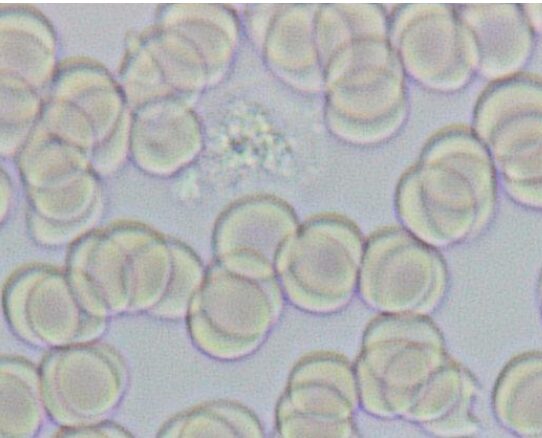
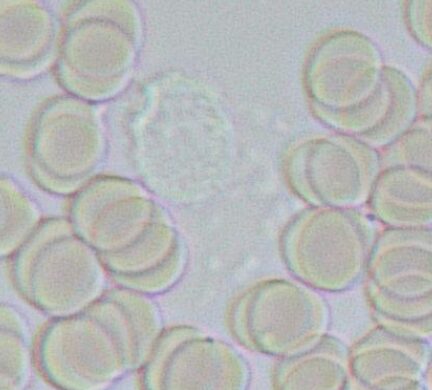
There is, however, a critical point where this shift becomes more serious. Candida belongs within the gut and on mucosal surfaces, but it does not belong in the bloodstream. When Candida is observed in live blood, it indicates that it has crossed beyond its natural boundaries. This is not simply a case of overgrowth. It is evidence of a deeper issue within the structure of the terrain.
For Candida to appear in the blood, the integrity of the intestinal barrier must be compromised. The gut lining, which should function as a controlled interface between the inner and outer environments, becomes permeable. At that point, organisms that are normally contained within the digestive tract are able to move into circulation. Candida is capable of penetrating tissues through its filamentous structures, moving beyond the epithelial surface into deeper connective environments where nutrients are abundant and immune surveillance is different.
Once it reaches these deeper layers, it can be carried through the body via the blood and lymphatic system. This stage reflects a shift from surface-level participation to systemic involvement. It is not simply a presence, but a redistribution within the body. The connective tissue, which serves as a transport medium for nutrients, becomes a new environment where Candida can continue to adapt and expand if conditions allow.
Candida itself is highly adaptive and responsive to its environment. It is capable of altering its metabolism, changing its structure, and even reorganizing its internal components to survive stress. When individual cells are damaged, components can be transferred to neighboring cells, preserving function and continuity. This level of cooperation within fungal networks reflects a form of collective intelligence that allows it to persist even under pressure.
The factors that drive this shift are cumulative rather than singular.
Diets high in refined and natural sugars provide abundant fuel for Candida growth. A loss of microbial diversity reduces competition and allows it to dominate. Weak digestion leaves behind partially broken down food that feeds microbial imbalance. A compromised gut lining removes the boundary that keeps the system contained.
These conditions do not occur overnight, and neither does Candida overgrowth. The process develops gradually, reflecting ongoing imbalance within the body.
As Candida expands, it also produces byproducts and metabolites that can influence the surrounding environment. In large amounts, these compounds can contribute to inflammation, immune activation, and systemic symptoms.
The body begins to respond not only to the presence of the organism, but to the conditions it creates. This is often when symptoms begin to appear, not because Candida exists, but because the balance of the system has shifted too far.
When Candida appears in the blood, it should not be viewed as an isolated problem to be eliminated, but as a signal that the terrain has shifted. It indicates that the gut environment is no longer stable, that microbial relationships have changed, and that the physical barrier of the gut has been weakened. In this way, Candida becomes a messenger rather than an enemy, revealing what is happening beneath the surface.
Restoring balance requires a return to ecological thinking rather than a focus on removal. Supporting microbial diversity through fermented foods introduces organisms that help re-establish balance within the gut. These microbes compete for space and resources, helping to naturally regulate Candida levels while strengthening the overall resilience of the system.
Feeding the microbiome through prebiotic fibers and resistant starches provides nourishment for beneficial organisms that maintain the structure and function of the gut. These compounds support the production of short-chain fatty acids, which strengthen the gut lining, improve barrier integrity, and create conditions that discourage overexpansion of any single organism.
Reducing excess sugar intake removes the primary fuel source that drives Candida expansion. This is not about deprivation, but about restoring balance to the system so that no single organism dominates. Supporting digestion and elimination ensures that food is properly processed and waste is efficiently removed, reducing the burden on the microbial ecosystem and preventing the accumulation of material that fuels imbalance.
As the terrain improves, the need for Candida to expand diminishes. The environment no longer calls for its overactivity. The microbial community stabilizes, the gut barrier strengthens, and the organism returns to its natural role within the system.
Candida is not the problem in isolation. It is part of a larger system that is constantly adapting to the conditions it is given. In balance, it serves a role within the microbiome. In overgrowth, it reflects imbalance. In the blood, it reveals a breakdown in the structure of the terrain.
Understanding Candida in this way changes the entire approach. The goal is not to remove it, but to restore the environment that keeps it in its proper place. When the terrain is rebuilt, microbial relationships stabilize, barrier function improves, and Candida naturally returns to balance within the system.
This is not a battle. It is a process of restoration.