Leisha
 In the quiet of an Ecuadorian night, while you sleep, a bustling army marches across your garden. Small, coordinated, and persistent, ants can strip a plant of its leaves, harvest every fallen crumb, and carry more weight than their own bodies without you noticing until the damage is done.
For those of us who care about healthy soil, thriving plants, and harmony with nature, learning to live alongside ants while keeping them from demolishing our gardens is essential.
The Ant Kingdom at Work
Ants (Formicidae) are one of the most successful species on Earth. Globally, there are over 14,000 known species of ants, with countless more yet to be described. Here in Ecuador, home to the Amazon rainforest, cloud forests, mountains, and coastal plains, ants are especially prolific. Ecuador boasts hundreds of species, from tiny sugar ants that sneak into kitchens to the imposing red leaf-cutters that can raze a young tree in a single night.
Some of the most common ants in Ecuador include:
- Atta cephalotes – the famous leaf-cutter ant, known for carrying green leaf fragments back to their massive underground colonies
- Paraponera clavata – the feared bullet ant, with one of the most painful stings on the planet
- Solenopsis geminata – tropical fire ants, red and aggressive, leaving burning bites
- Camponotus spp. – carpenter ants, large black or red ants often found in wood or soil
- Linepithema humile – the Argentine ant, invasive and highly adaptive
These ants organize themselves into colonies with a clear hierarchy: queen, workers, soldiers, and in some species, farmers. They communicate through chemical signals called pheromones, laying invisible trails on the ground, leaves, or stems to lead their fellow workers to food sources or danger. When you see a perfectly organized line of ants marching to and from your garden bed, you are witnessing this remarkable communication in action. And often, when these trails appear with particular intensity, it can signal that rain is approaching. Many gardeners here have noticed ants moving frantically to shore up their nests just before a downpour.
The Night Harvesters
While ants are vital to ecosystems, aerating soil, decomposing organic matter, and preying on pests, certain species can wreak havoc in a garden.
In Ecuador, leaf-cutter ants are perhaps the most destructive. Unlike other ants that scavenge crumbs or prey on insects, leaf-cutters methodically harvest fresh leaves, carrying them in long green processions back to their underground nests. They do not eat the leaves directly but use them to cultivate a specific type of fungus that feeds the colony. This underground fungus farm is extraordinary. It can grow to the size of a small car, supporting millions of ants and producing a continuous supply of food.
The fungus they cultivate is actually beneficial in the wild. It breaks down tough plant material that otherwise would not decompose quickly, enriching the soil with organic matter and feeding the larger ecosystem. In a natural forest, this process creates rich, fertile humus and supports a diversity of life. But in a garden setting, the scale of their harvest can overwhelm young plants and compromise your harvest.
I have seen kale beds completely cleared overnight, with only the ribs of the leaves remaining. Leaf-cutters love moringa trees and can strip every leaf from a sapling in a single evening, leaving it bare and struggling. I woke one morning to see an entire hibiscus hedge hredded with thousands of ants still ferrying bits of leaf into the earth by morning.
Other ants tend aphids, mealybugs, and scale insects, protecting these sap-sucking pests in exchange for their sweet honeydew secretions. These insects tap into the plant’s veins and draw out sap, excreting excess sugars as honeydew. Ants harvest this honeydew as a prized food source, even stroking the insects with their antennae to encourage them to release it.
They move these pests to the youngest, most tender growth, shield them from predators, and sometimes even build shelters of soil or plant fibers over colonies to keep them safe and productive. In some cases, ants carry aphid eggs into their own nests during dry or cold seasons and bring them back out to fresh plants when conditions improve.
This careful farming allows the sap-sucking populations to explode, weakening plants, spreading disease, and coating leaves with sticky honeydew that encourages black sooty mold. The ants, in turn, thrive on this sugar-rich harvest, deepening the imbalance and keeping beneficial predators away.
Ant Bites Can Hurt
Ants defend their colonies fiercely. Many species bite, sting, or spray acid when disturbed. The sting of the bullet ant (called hormiga bala in Spanish) is infamous for its intense, burning pain that can last for hours. Fire ants inject venom that can cause itching, swelling, and sometimes severe allergic reactions. Even the smallest ants can irritate sensitive skin, and in rare cases, ant venom triggers anaphylaxis, which is a potentially life-threatening reaction.
This happens because ant venoms contain a cocktail of proteins, enzymes, and alkaloids designed to immobilize prey and warn off predators. In humans, these substances provoke an immune response that manifests as redness, swelling, and pain.
If you are bitten, wash the area gently, apply a cold compress to reduce swelling, and rub the skin with a slice of raw onion or a paste of baking soda and water to soothe irritation. Some people find that a dab of honey or aloe vera also calms the sting. Healing
Conventional Solutions Do More Harm
Understandably, many gardeners reach for chemicals to eliminate ant problems. But synthetic pesticides and harsh chemicals do more than kill ants. They sterilize the soil, harm beneficial insects like bees and ladybugs, and disrupt the microbial life that plants depend on.
As someone who values the delicate balance between soil, plants, and microbes, I look for natural ways that do no harm.
Living Ground offers two products designed to keep ants away from gardens without harming the soil, plants, or beneficial microbes. These products work by confusing the ants’ chemical communication and creating an environment they find unpleasant, encouraging them to move elsewhere.
The Herbal Ant Deterrent Spray
Our Herbal Ant Deterrent Spray is crafted from an infusion of aromatic spices such as clove, cinnamon, and star anise, combined with essential oils of peppermint, rosemary, and citrus. This powerful blend is lightly preserved and ready to spray along ant trails, at the base of plants, or on surfaces where ants are active.
It works by disrupting the ants’ pheromone trails, masking the signals they leave for their fellow workers, and deterring them from returning. With a pleasant, earthy scent, it is safe for plants, microbes, and pets and can be reapplied as needed.
For those who prefer a sprinkle-on option, we also offer our Dry Barrier Blend, a mix of natural powders including cinnamon and mint leaves, designed to create a physical and aromatic barrier that ants avoid crossing. Simply sprinkle around garden beds, pots, or paths. It is effective, long-lasting, and soil-friendly.
Unlike conventional ant killers that poison soil, water, and beneficial creatures, our deterrents are made from plant-based ingredients that biodegrade harmlessly. They deter ants without killing them outright, respecting their ecological role while protecting your garden.
Safe for soil microbes and fungi
Non-toxic to pollinators and pets
Pleasant scent and easy to apply
Locally made and suited to Ecuador’s climate and species
The ants of Ecuador are part of the web of life, tireless workers, farmers, soldiers, and foragers. But when they set their sights on your garden, they can overwhelm a young plant overnight. Knowing how they operate and having the right tools at hand makes all the difference.
I do not like going to war with ants. We should never follow them to their nests and destroy their underground homes. This kind of act often does more harm to the garden and the soil than good. Our goal is to minimize the harm they can do and learn to live with them wherever possible.
Our Herbal Ant Deterrent Spray and Dry Barrier Blend were created for gardeners who care about their plants and the earth beneath them. They offer an effective, soil-safe way to keep ants in their place without harsh chemicals or harm.
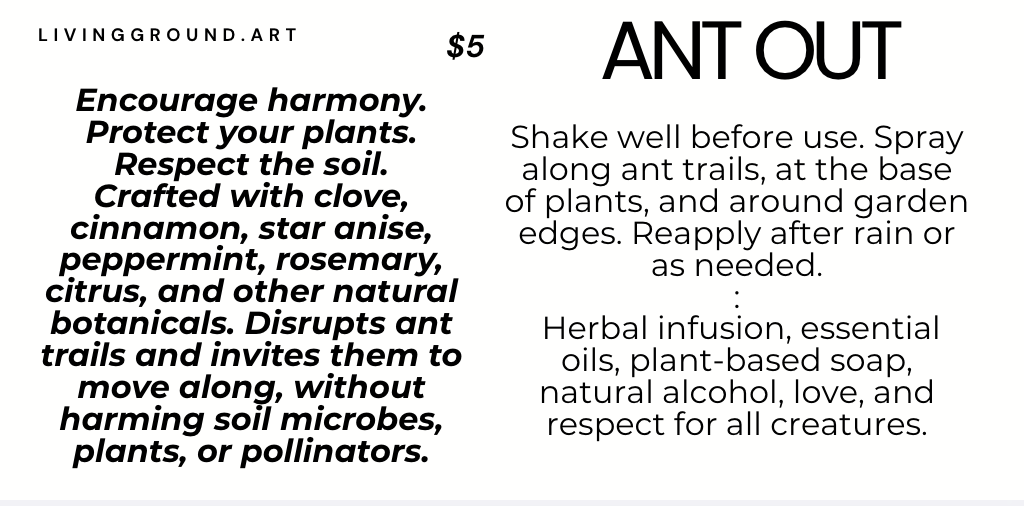
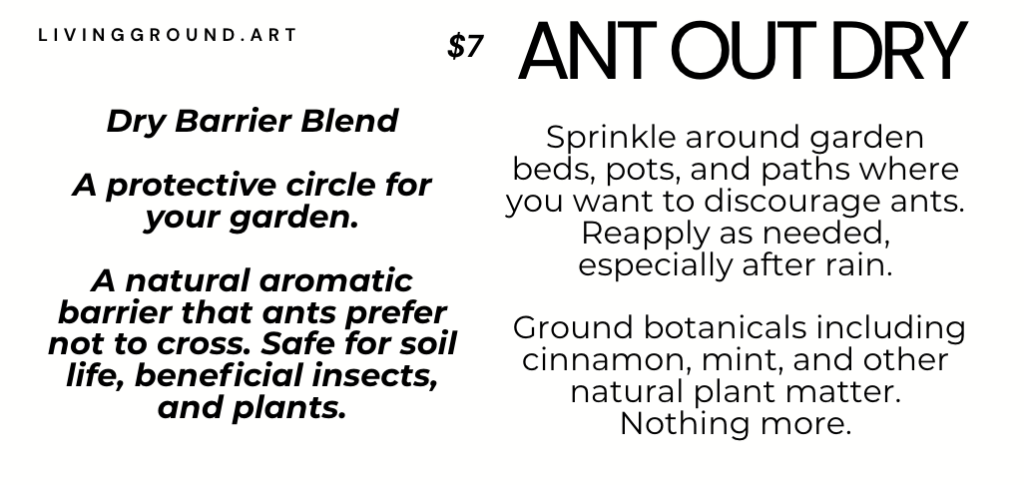
All our products can be found at our Project Site or our live store online
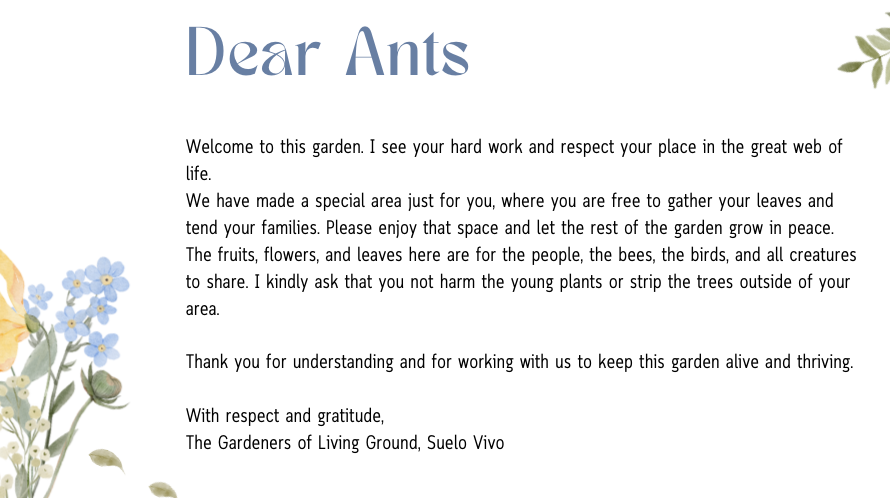
And perhaps as equally important, I will share with you something my Mom taught me as a child. She would write little signs, letters to the unwanted critters, and place them in cupboars. I now do the same in the garden. The letter invites the ants to enjoy that special area and politely ask them to leave the rest of the garden alone. Strangely enough, it actually works more often than you would expect. Maybe the ants understand respect and intention better than we realize. Give it a try.