
 Leisha
 Not all gut herbs kill. Some nourish. Some soothe. Some create the conditions where balance naturally returns without force or disruption. Aloe vera is one of those herbs.
Most people think of aloe as something you put on sunburn. And yes, the gel from its thick, succulent leaves does cool and heal the skin. But inside the body, especially in the gut, it does something much deeper. Aloe is a terrain herb. It works by creating space. It cools inflammation. It strengthens the gut wall. And it helps the beneficial microbes take root and thrive.
What makes Aloe vera unique is its ability to target what does not belong without harming what does. Its inner gel is rich in polysaccharides like acemannan, which act as prebiotics, food for beneficial microbes like Lactobacillus, Bifidobacterium, and Faecalibacterium prausnitzii. These microbes are the builders of the gut wall. They produce short-chain fatty acids like butyrate that reduce inflammation and feed colon cells. When we nourish them, the whole system becomes more resilient.
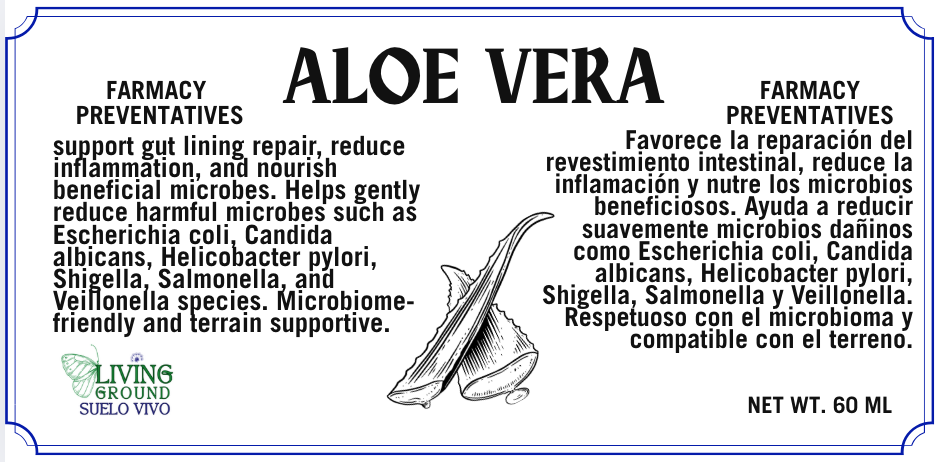
At the same time, aloe has been shown to inhibit the growth of harmful microbes, including:
- Escherichia coli
- Helicobacter pylori
- Candida albicans
- Shigella
- Salmonella enterica
- Veillonella species (often elevated in dysbiosis)
Unlike harsh antimicrobials, aloe does not disturb the balance. It quiets what is excessive and strengthens what is weak. It contains natural compounds like anthraquinones and phenolics that gently discourage overgrowth, especially when the gut is inflamed or damaged.
But what makes aloe so important for the microbiome is its mucilaginous nature. The gel coats the intestinal lining like a protective film. It supports the mucus layer, which is the very terrain where beneficial bacteria anchor and thrive. This layer also protects us from leaky gut, inflammation, and autoimmune activation. Aloe does not just manage microbes. It restores the environment that keeps them in check.
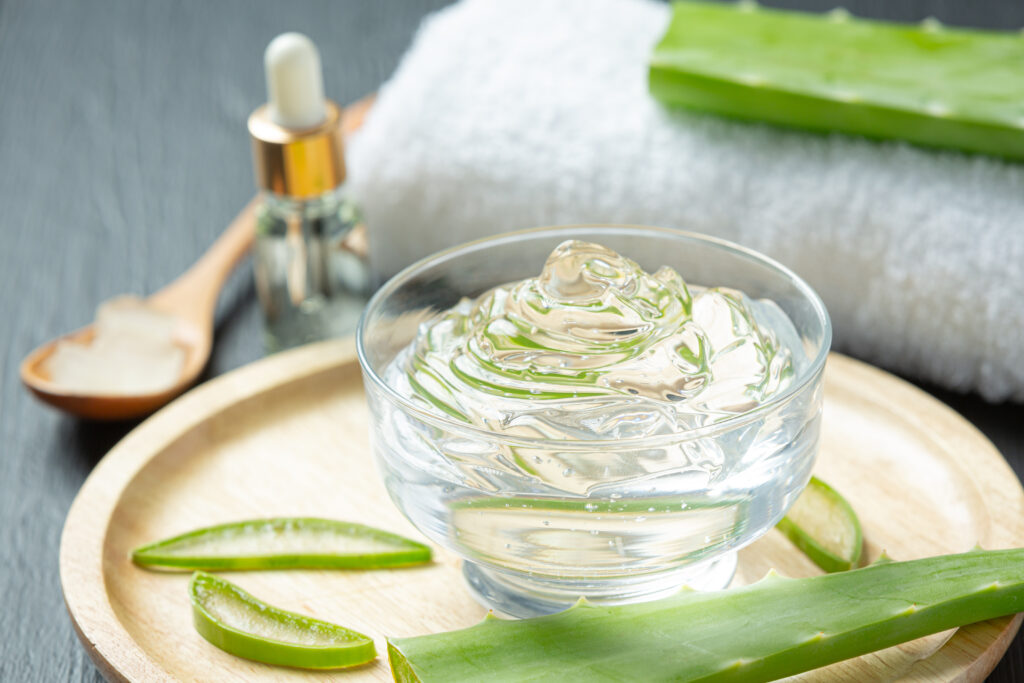
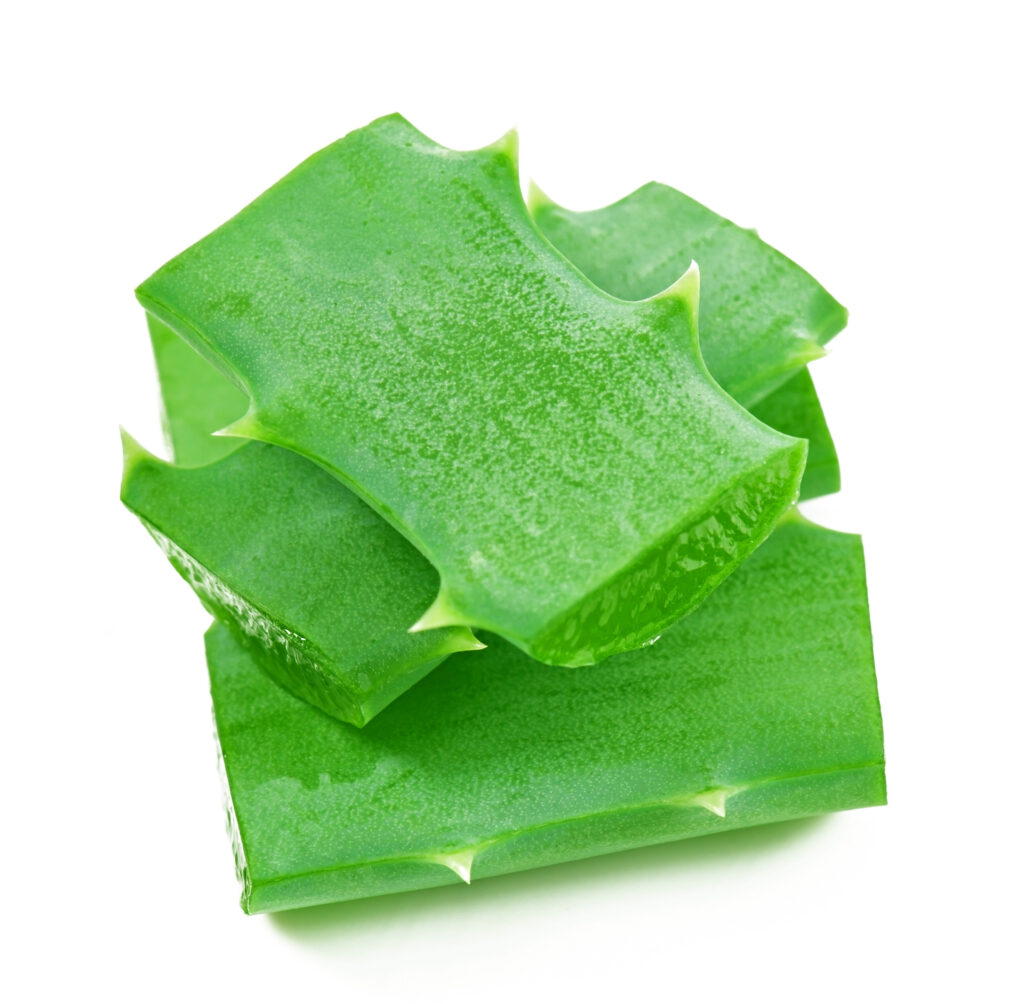
You can take aloe gel directly from the plant, or you can use a carefully prepared extract. But it’s important to avoid the outer leaf and the bitter latex unless specifically indicated. For gut healing, we want the inner gel only — clean, clear, and soothing.
In our apothecary, I prepare a double-infusion tincture using fresh inner gel and alcohol extraction. This preserves the polysaccharides while allowing the antimicrobial and anti-inflammatory compounds to remain shelf stable. It’s gentle enough for daily use but strong enough to support a gut that’s been burdened by dysbiosis, antibiotics, or chronic inflammation.
Aloe Vera, found thriving in the arid landscapes of deserts or alongside stark, rocky outcrops, has long captivated human curiosity. When my journey took me from Canada to Ecuador, I discovered Aloe anew. No longer confined to a pot on my windowsill, it became an integral part of my indoor garden, embodying resilience and rejuvenation. This hardy succulent, an indomitable force, stands as a verdant testament to endurance, invoking inspiration to persevere through life’s trials.

In the face of Canada’s cold winters, I witnessed Aloe’s unwavering spirit. During summer, she embraced the elements outdoors, enduring every climatic whim without faltering. It wasn’t merely a plant; she became a symbol of fortitude, instigating my curiosity about her ultimate resilience.
Driven by this fascination, I embarked on an unusual experiment to test Aloe’s limits, placing her in utter darkness, deprived of light, soil, and water. My conscience weighed heavy as I wondered if I was putting her resilience to the ultimate test. Time slipped by, and, overwhelmed with life’s distractions, I momentarily forgot my leafy subject. Yet, upon rediscovery, the Aloe was still alive, albeit faded and weak. This remarkable survival revealed a profound truth: both plants and humans possess inherent strength, capable of withstanding unimaginable adversity.
This lesson reaffirms our own potential for resilience. Aloe’s story is not just about survival but thriving under the harshest conditions. By nurturing her back to health, I witnessed firsthand the power of rejuvenation, a vital principle applicable to us all. Defying predictability, the Aloe, once dormant, returned to robustness with gentle care.
Intrigued by her subtle complexities, I pondered the enigmatic fragrance Aloe exudes—an earthy, fresh scent with a hint of medicinal sharpness. This mixture of nutty and tangy elements evokes a contradiction, alluring yet puzzling. Inherent as it is, the natural perfume encapsulates Aloe’s cryptic allure, leaving an indelible mark in the olfactory memory.
Beyond her aromatic intrigue, Aloe Vera holds a celebrated place in holistic care, lauded for soothing sunburns and enhancing skin health. My firsthand experience came on a blistering summer day when I turned to Aloe’s cooling gel for relief. Her transformative power was immediate, turning discomfort into a soothing caress. Today, Aloe’s legacy continues in my skincare rituals, offering rejuvenation with her natural bounty.
In Ecuador, the Aloe’s blossoms become a symphony of nature’s artistry. The vibrant blooms, a beacon for pollinators like hummingbirds, unfold a dynamic relationship within the ecosystem. Bearing colorful allure, they spark fascination not only in beauty but in reproductive strategies, as these flowers cannot self-pollinate. Instead, nature orchestrates an intelligent dance of cross-pollination, ensuring diversity and vitality.
The simplicity of a flower belies the complex processes within. The bright yellow pollen, laden with potential, intrigued me enough to explore its subtle sweetness in water. What might lie within this golden dust, and what further benefits might it hold? The unknown fuels my continued exploration of Aloe’s remarkable traits, both in her environmental role and her contributions to wellness.
In this pursuit, Living Ground seeks to enhance Aloe’s efficacy by freeze-drying her into a potent powder form, seamlessly integrating into our products. This process preserves Aloe’s vital nutrients and bioactive compounds, maximizing her benefits while extending her usability across cosmetics and health items. The resultant powder fits effortlessly into life’s routines, whether soothing irritated skin or fortifying gut health with prebiotic goodness.
Aloe’s role is versatile—externally nurturing through topical applications and internally supporting digestive health. The holistic use of Aloe extends her prowess beyond simple application, becoming a cornerstone in gut health due to her malleable components, particularly Acemannan. This polysaccharide nourishes beneficial gut bacteria while synergizing with the body’s complex systems, uplifting digestive and immune health.
As an ally to urban living, Aloe also purifies indoor air, her leaves adept at trapping toxins. Her presence in spaces where we breathe is not only refreshing but cleansing, reiterating nature’s intrinsic ability to create harmonious living environments.
The integration of Aloe in Living Ground products speaks to her enduring effectiveness. Digestive health, in particular, benefits from her soothing qualities and gentle laxative effects, promoting smoother, more regular bowel activities essential for gut balance.
But beyond the healing touch, Aloe’s narratives entwine folklore with science, steeped in ancient practices that celebrate her ability to balance the body’s energies. In Ayurvedic tradition, she addresses the Pitta dosha with her cooling gel, extending a calming influence that bridges ancient wisdom with contemporary wellness practices.
By embracing the living connection between soil and plant life, Aloe’s symbiotic relationship with Bacillus subtilis in her root rhizosphere further underscores nature’s wisdom. This bacterium supports her growth, enhancing nutrient uptake and production of essential compounds that strengthen Aloe’s resilience.
In celebrating Aloe’s myriad offerings, her versatility extends into culinary and cosmetic creativity. Consider these recipes that incorporate Aloe’s enriching attributes into pleasurable routines:
Aloe Vera Cooling Tonic
- 1 cup fresh aloe vera gel
- 1 peeled cucumber
- 1 inch fresh ginger root, peeled
- Juice of 1 lemon
- Handful of fresh mint leaves
Blend all ingredients until smooth and well combined. Pour into a glass jar and refrigerate. Drink 1/4 cup of this digestive tonic before meals for digestive support and a cooling sensation.
Aloe Vera & Cucumber Soothing Skin Tonic
- 1/2 cup fresh aloe vera gel (inner leaf)
- 1/2 cucumber, peeled and diced
- 1 tablespoon rose water
- 1 teaspoon vitamin E oil
- 1-2 drops lavender essential oil (optional)
- Ice cubes
Extract the fresh gel from the inner leaf. Combine the aloe vera gel, diced cucumber, rose water, vitamin E oil, and lavender essential oil (if using) in a blender. Blend until smooth, then strain to remove any pulp. Pour the liquid over ice cubes in a glass. Gently pat the tonic onto your face with a cotton pad or your fingertips, allowing the cooling and soothing benefits to refresh your skin.
In both formulas and philosophy, Aloe stands apart as an enduring beacon of health and harmony. At Living Ground, we continue to champion her properties, channeling Aloe’s allure into new, transformative products. Trustworthy and versatile, Aloe Vera sustains the balance of life, from skincare marvels to internal wellness enhancements, grounded in the natural symphony she conducts in our lives.
Aloe vera doesn’t blast pathogens. It holds space for healing. It feeds the right microbes. It rebuilds the lining. And it invites the whole system to come back into rhythm.
This is why aloe is not just a remedy. It is a member of the microbiome family. A partner in repair.
And she works quietly, but deeply. Always.
Aloe Vera and the Microbiome – Sources
- Prebiotic potential of Aloe vera mucilage
https://www.researchgate.net/publication/269469197_In_vitro_assessment_of_the_prebiotic_potential_of_Aloe_vera_mucilage_and_its_impact_on_the_human_microbiota - Aloe vera’s antimicrobial and anti-inflammatory properties
https://www.ncbi.nlm.nih.gov/pmc/articles/PMC2816467/ - Aloe vera and gastrointestinal inflammation
https://www.ncbi.nlm.nih.gov/pmc/articles/PMC10385217/ - Aloe vera’s effect on gut microbiota composition
https://www.mdpi.com/2072-6643/14/13/2711


