
 Leisha
 I often wonder where my fascination with gardens, herbs, and growing food really began. Looking back, I think it started in my mother’s rose garden. I didn’t realize it then, but perhaps that was also the beginning of learning about self-reliance.
As a little girl in England, I decided I was going to make rose water. I picked armfuls of my Mom’s beautiful roses without giving much thought to what she might think when she discovered half the garden missing. I wasn’t trying to destroy anything. I genuinely believed I was making medicine. I don’t remember whether my little experiment was successful, but I do remember how excited I was. I also remember how upset my Mom was. Even then I saw plants as something more than beautiful flowers. I believed they had a purpose, and I wanted to understand what that purpose was.
Then as a young women, I planted my first herb garden in our first house, Not because I wanted to become a gardener, but because I loved to cook. Fresh rosemary, thyme, sage, oregano, and basil completely changed the way I looked at food. They were fragrant, beautiful, and alive in a way dried herbs from a jar could never be. I was hookend.
Living in Canada also meant learning how to preserve them before winter arrived. Drying herbs, storing them, making infused oils and vinegars, and slowly filling the pantry for the off season became part of everyday life.
Without realizing it, I was learning that a garden doesn’t just feed you today. It teaches you to think ahead, work with the seasons, and prepare for tomorrow.
When we bought our first property and built our first house, my interest became something much deeper. We had a pond dug, and the soil that came out of it was spread around the house. Everything I planted flourished. I though all gardens did this but really it was the soil from the pond. The vegetables were abundant, the flowers were spectacular, and the sunflowers seemed impossibly tall with huge flower heads. I knew nothing about the soil food web back then. But, I egotistically thought I had an incredible ability to produce life in the garden. Again, it was the black pond soil, not me. I spent every spare moment outside growing.
Eventually the gardens were joined by chickens, turkeys, sheep, and pigs. I wanted to know what it really meant to produce our own food. It wasn’t always easy. In fact, I quickly learned that self-reliance is hard work. Gardens don’t wait because you’re busy. Animals still need feeding when you’re tired. If you want food in the middle of winter, someone has to preserve it during the summer.
Those years gave me enormous respect for the generations that came before us because these weren’t hobbies to them. They were simply the skills of everyday life.
About six years ago another piece of the puzzle fell into place when I discovered Dr. Elaine Ingham’s work on the soil food web. It completely changed the way I looked at gardens and, unexpectedly, it changed the way I looked at health. I realized I hadn’t really been growing vegetables all those years. I had been growing healthy soil, and healthy soil naturally grows healthy plants and healthy plants create healthy humans. That one realization connected everything I had been learning throughout my life.
As I learned more about the incredible community living beneath our feet, I also began seeing my work with people differently. Healthy soil is not created by focusing on one organism. It develops because countless organisms work together, each contributing to the health of the whole. I began to see the human body much the same way. The microbiome in our bodies and the microbiome in the soil are not separate stories. They are part of the same story, and both remind us that health grows from relationships, diversity, and balance.
This understanding eventually became Living Ground and the foundations of our Project.
People often ask whether Living Ground is a garden, a café, a workshop centre, a place to learn about live blood analysis, or somewhere to stay. The truth is that it is all of those things, but more than anything it is a place where people can experience another way of thinking.
I wanted to create a place where people could walk through healthy gardens, harvest herbs, prepare nourishing food, look through a microscope, learn new skills, and leave believing they could create something similar wherever they live. You do not need hundreds of acres. You do not even need a farm. A few herbs outside the kitchen door, a compost pile, a fruit tree, or a small vegetable garden is enough to begin.
Over the years my purpose has become much clearer. My goal is not simply to teach people how to garden. My goal is to help people succeed.
We work alongside people who have land and want to make better use of it. Together we explore ways to grow food, improve the soil, grow herbs, create products, and build practical self-reliance. Every property is different, but each one has potential waiting to be discovered.
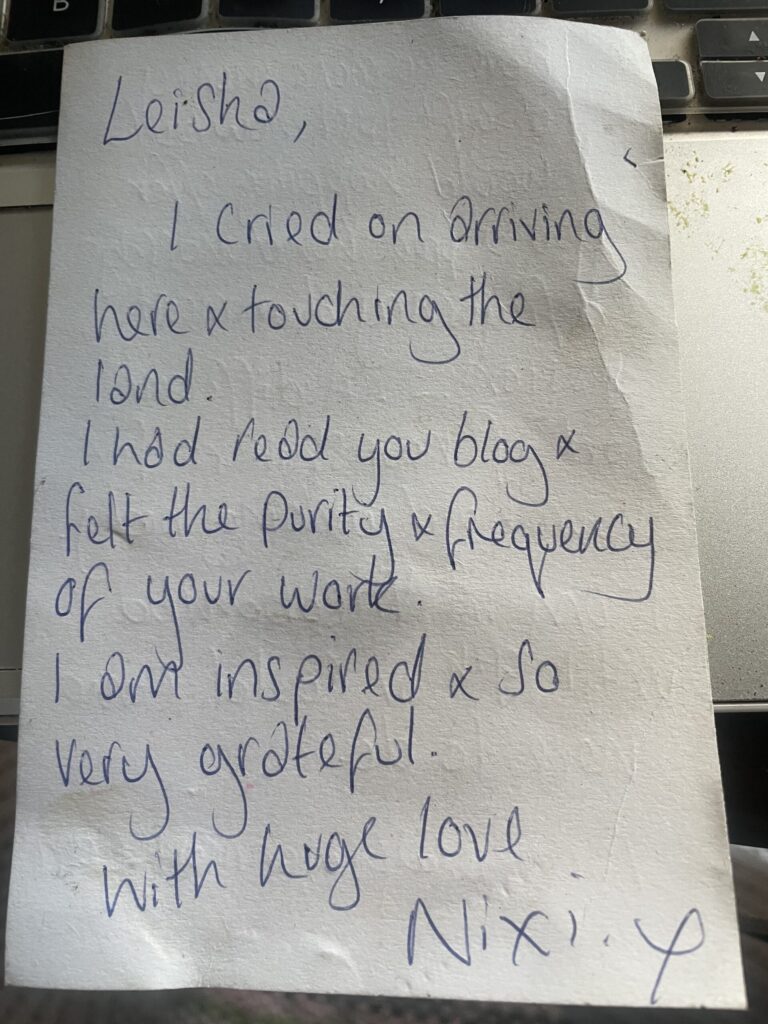
Here at Living Ground we are also training local women in practical skills that include cooking, food preservation, medicinal herbs, gardening, hospitality, and working with guests. These are skills they can use here, take into future employment, or build their own little inter-dependence enterprise under the umbrella of Living Ground.
New ideas continue to grow as well. At this time, some ladies are dreaming of creating a small spa which is exciting. I see compost mud baths in our future. Others are developing herbal products. I am entering the stage of teaching workshops. We are building something unique that reflects the passions and abilities of the team players.
I really do enjoy helping people explore those ideas and watching them slowly become reality.
Then there are the guests who come here from around the world. Some arrive wanting to learn about the soil food web. Others come for live blood analysis, medicinal herbs, gardening, health, or simply to spend time in a place where nature is part of everyday life. We learn from one another, and every visit becomes another piece of the story.
Sometimes I think we have lost confidence in ourselves. Not very long ago, children grew up learning how to plant gardens, preserve food, gather herbs, cook from scratch, and care for the land because they watched the adults around them doing those things every day. Somewhere along the way we stopped passing those skills on. We became consumers instead of participants, and in doing so we lost more than practical knowledge. We lost confidence in our own ability to provide for ourselves.
That is what the title of this article means to me. People who can feed themselves cannot be ruled.
To me, feeding ourselves is about much more than growing vegetables. It is about understanding the soil beneath our feet, caring for the living community within it, growing nourishing food, preserving the harvest, preparing herbal medicines, understanding our own health, and sharing those skills with others. Every one of those abilities makes us a little less dependent and a little more confident.
I hope everyone who visits Living Ground leave inspired to create something that fits their own life, their own family, and their own community. If they plant their first herb garden, build a compost pile, improve the soil on their land, preserve food, teach a child how to grow vegetables, or discover a new direction for their own future, then Living Ground has done exactly what I hoped it would do.
For me, this has never really been about gardens. It has always been about helping people rediscover the confidence, knowledge, and practical skills that allow them to care for themselves, support one another, and build healthier communities from the ground up.
When I think back to that little girl standing in my mother’s rose garden, I realize she wasn’t just making rose water. She was beginning a journey that would eventually lead her to herbs, gardens, healthy soil, microbes, Ecuador and finally Living Ground. I couldn’t have imagined where that path would lead, but I am grateful that I followed it.
That is why the words, “People who can feed themselves cannot be ruled,” have become so meaningful to me. They are not really about food at all. They are about confidence, knowledge, community and remembering our relationship with the living world. They remind us that freedom grows from understanding, that resilience begins beneath our feet, and that every seed we plant is an investment in a future where people know how to care for themselves, their families, their communities and the land that has always cared for us.


