
 Leisha
 I was reading about the latest dietary trend called “fiber maxxing,” where people deliberately try to push their fiber intake higher and higher, sometimes to 50 or 60 grams a day. I am certainly in favor of eating more fiber, especially when modern diets contain so little of it, but reducing fiber to a daily number misses almost everything that makes it biologically interesting.
The real story begins after fiber reaches the gut. Some plant carbohydrates escape our own digestive enzymes and arrive in the colon, where they enter an enormous microbial community that begins breaking them apart, fermenting them and passing the products from one organism to another.
What we call fiber is really a collection of many different substances. Resistant starch, pectin, beta-glucans, arabinoxylans, cellulose and other plant carbohydrates each have their own structures, and different microbes carry different tools for working with them.
A bowl of beans is therefore not simply delivering ten or fifteen grams of fiber. It is delivering a collection of microbial foods into an ecosystem, and the response depends partly on which organisms are already there and what they know how to do.
We Do Not Digest All of Our Own Food
Human digestion is only part of the story. Our own enzymes cannot completely dismantle many of the complex carbohydrates contained in plants, so part of the meal continues into the colon where microbial enzymes take over.
Collectively, the organisms living there possess an extraordinary library of carbohydrate-degrading machinery. One organism may be able to open a structure that another cannot touch, while a different microbe may specialize in using the smaller fragments released after the first organism has begun the work.
The process quickly becomes communal. One organism gets access to the original food, another feeds from what is released, and another may use the metabolic products created farther down the chain.
This is much closer to a food web than the simple idea of “fiber feeding good bacteria.” The whole outcome depends on who is present, who can open the food source and who can use what comes next.
Meet Ruminococcus bromii
One little gut microbe makes this remarkably easy to see, and even its name has a story. Ruminococcus refers to a round organism associated historically with the rumen, while bromii comes from Bromius, one of the names associated with Bacchus, the god of wine.
So here we have a tiny intestinal organism with a name that somehow connects the rumen and wine. How cool is that? More Ruminococcus bromii is a keystone organism in the breakdown of certain forms of resistant starch.
Resistant starch is starch that escapes much of our digestion in the small intestine and reaches the colon relatively intact. It is cooked and cooled carbohydrates such as rice, potatoes and pasta. We can not use this (break it down) and use as an energy source. Many gut organisms are not particularly good at getting into these tightly packed starch granules, but R. bromii is exceptionally well equipped for the job.
It carries specialized starch-degrading machinery that allows it to attach to and begin opening the starch structure. Once it starts breaking the granule apart, smaller carbohydrate fragments become available to other organisms that could not efficiently use the original starch themselves.
R. bromii is therefore doing more than feeding itself. It is opening a food source for the wider microbial community, which is exactly the kind of ecological role that makes a keystone organism so important.
Food Changes Which Microbes Thrive
The population side of this is one of the most interesting parts of the gut microbiome. Microbes can reproduce quickly, so when a particular food suddenly becomes abundant, the organisms best equipped to use it gain an immediate ecological advantage.
Human feeding studies have shown R. bromii-related populations rising dramatically during diets rich in resistant starch. When the diet changes again, those populations can fall and another set of organisms gains the advantage.
Nature works this way everywhere. When animals have abundant food, water and suitable habitat, populations can expand, while drought, fire, habitat loss or disappearance of a food source changes which species can continue to thrive.
The gut follows the same basic ecological rules. Continually supply resistant starch and the organisms capable of using resistant starch have a dependable food supply, while organisms adapted to something else do not receive the same advantage.
The microbial community can therefore change according to what appears on our plate day after day. Our diet is not merely feeding a fixed microbiome because it is constantly helping select which organisms remain abundant and which become minor members of the community.
Some People May Not Have Enough of the Specialist Yet
Research on resistant starch has also shown how different two people can be. Some people ferment resistant starch extremely efficiently, while others leave much more of it unprocessed.
R. bromii appears to be one reason for that difference. In studies where this organism was abundant, resistant starch breakdown could be very high, while people with little or no detectable R. bromii sometimes fermented much less of the same starch.
The food was identical, but the ecology receiving the food was not. One person had a strong population of organisms able to open the resource, while another did not have enough of those organisms to do the job as efficiently.
I think this is a much more useful way to understand individual reactions to fiber. The question is not only, “Is this food good for me?” because another important question is, “Does my present microbial community know what to do with it?”
One Microbe’s Waste Can Be Another Microbe’s Food
Once microbes begin fermenting carbohydrates, they produce many smaller compounds. Lactate, acetate, succinate, formate and gases can all appear during these pathways, but calling them waste products is misleading because another organism may be waiting to use them.
Lactate is a very good example. Some microbes produce lactate during carbohydrate fermentation, while other microbes consume that lactate and transform it into compounds such as butyrate or propionate.
A microbe that cannot use the original fiber may therefore thrive because another organism ate the fiber first. The first organism changes the food into something the second organism can use, and the second may then create something useful for another member of the community or for our own intestinal cells.
The whole system depends on these handoffs. A healthy food web is not simply about having organisms that can eat fiber because it also needs organisms capable of handling everything produced farther down the chain.
Butyrate Is the End of a Much Bigger Story
We often hear the simple statement that fiber produces butyrate. In reality, butyrate may be the result of several microbial steps involving several different organisms.
One microbe may open the original carbohydrate, another may ferment what is released and produce lactate or acetate, while a third organism may use those compounds to produce butyrate. The cells lining the colon can then use butyrate as an important source of energy.
A piece of plant food can therefore move through several microbial relationships before becoming something our own body uses. That is a very different picture from imagining fiber simply passing through the digestive tract.
The final result depends on whether the whole pathway is working well. If the first organisms in the chain are abundant but the organisms farther downstream are scarce, fermentation can look very different.
Gut Microbes Really Do Produce Hydrogen
Hydrogen surprised me when I began looking more closely at these pathways. Many intestinal microbes actually produce molecular hydrogen, H₂, while fermenting carbohydrates.
Fermentation involves moving electrons as microbes extract energy from food. Producing hydrogen is one way certain organisms handle that chemistry, so H₂ becomes another product released into the gut environment.
Some of that hydrogen contributes to the gas measured in hydrogen breath tests. Some is absorbed or eventually leaves the body, while some becomes food for other microorganisms known as hydrogenotrophs.
Those organisms literally use hydrogen as part of their own metabolism. Depending on which organisms are present, hydrogen can be pulled into other pathways and converted into compounds such as methane or acetate.
Hydrogen is therefore not simply useless gas. It is another substance moving through the microbial food web, and the amount that accumulates depends partly on the balance between the organisms producing it and the organisms using it.
Lactate Is Not Lactose
The words lactate and lactose sound so similar that they are easy to confuse. Lactose is the sugar found in milk, while lactase is the human enzyme in the small intestine that breaks lactose into smaller sugars that can be absorbed.
Lactate is something entirely different. It is an organic acid produced during metabolism, including by many gut microbes during fermentation.
When someone produces too little lactase, part of the lactose may pass undigested into the colon. The microbes living there suddenly receive a carbohydrate food source and begin fermenting it, producing hydrogen, organic acids and other metabolites.
That fermentation is part of what can produce bloating, gas and diarrhea in lactose intolerance. Lactate may be one of the products created during the process, but lactate itself is not the cause of lactose intolerance.
The ecology can adapt here too. Repeated exposure to lactose has been shown in some studies to change microbial activity in the colon, even though the person’s own lactase production may not increase.
I would never interpret that to mean someone should force large amounts of milk if it makes them miserable. It does show, however, that microbial communities can change how they handle a repeatedly supplied carbohydrate.
Bloating Does Not Automatically Mean the Food Is Bad
Someone who has eaten very little fermentable plant material for years may react strongly when a large amount is introduced all at once. The first organisms able to use the new food may become very active immediately, while the populations farther down the metabolic chain have not yet caught up.
Gas and bloating can be part of that mismatch. Hydrogen, lactate and other fermentation products may be produced faster than the existing community can use or transform them.
I would use that reaction as information about the present ecology, not as an automatic verdict against the food. Start with a small amount, see how the body responds and find an amount that feels comfortable before gently increasing it.
The process may take time because the microbial community has to change with the diet. A small amount given regularly may allow the organisms capable of using that food to expand gradually, while the organisms feeding from their metabolic products also have time to increase.
Bloating therefore does not always mean, “My body cannot eat this.” Sometimes it means, “This amount was too much for the microbial community I have today.”
The Gut Can Become Better at Handling the Same Food
Calling this learning is useful as long as we remember that microbes are not learning consciously. The learning happens through population shifts, gene activity, enzyme production and the strengthening of microbial relationships.
When a particular carbohydrate arrives regularly, organisms capable of using it receive a reliable food supply. Those populations can grow, and the community can increase its capacity to produce the enzymes needed to process that food.
Over time, the same meal may create a very different response. The food has not changed, but the microbial community receiving it may now be larger, better equipped and better connected to the organisms that handle the next stages of fermentation.
This kind of adaptation helps explain why gradual increases in fiber often make more sense than suddenly throwing huge amounts into the gut. The aim is not to overwhelm the system but to give the ecology enough food to grow into the job.
Whole Foods Create a Broader Microbial Menu
An apple is not five grams of fiber from the perspective of the microbiome. It is pectin, plant cell walls, polyphenols and many other compounds held inside a physical structure that microbes have to work their way into.
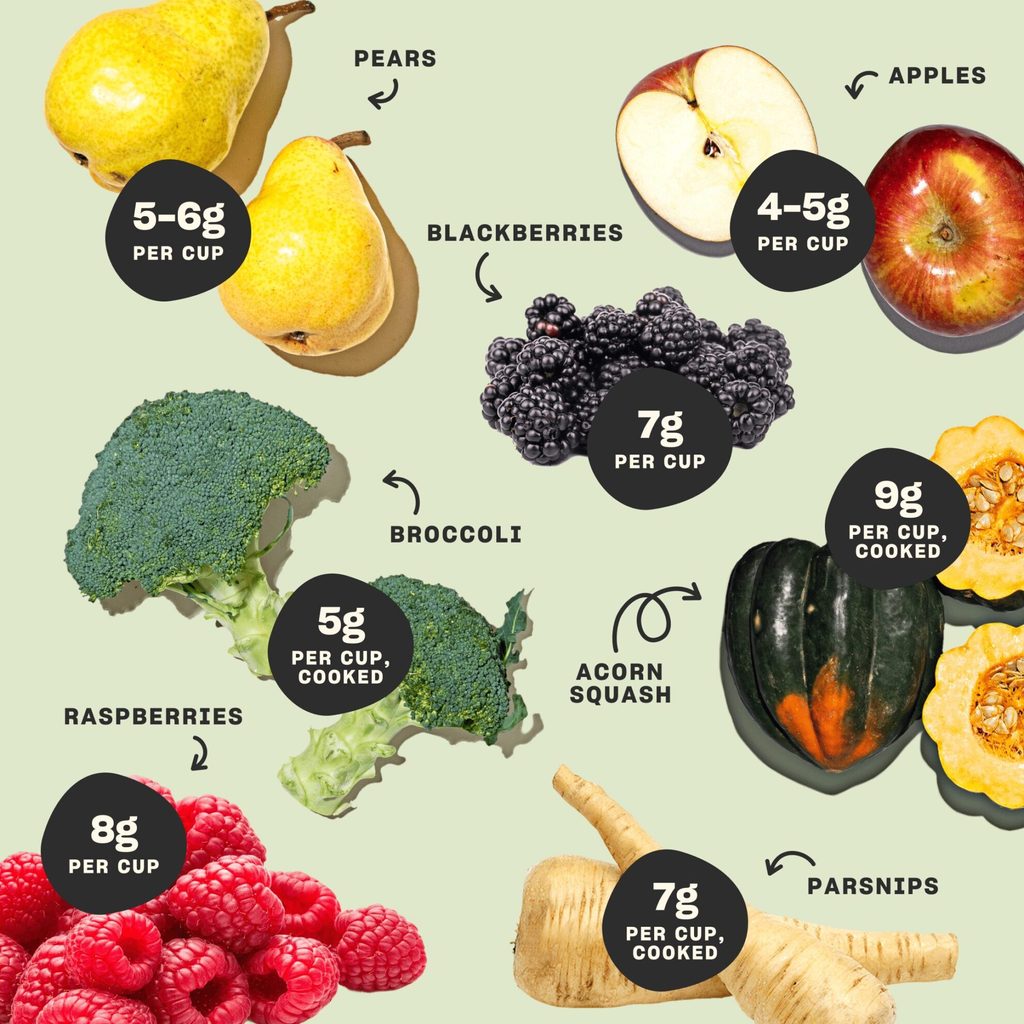
Oats bring beta-glucans and resistant starches, while beans bring resistant starches and oligosaccharides. Onions and garlic bring fructans, and roots, herbs, greens, seeds and fruits each add something different again.
A varied diet therefore creates many different microbial niches. Different organisms receive different resources, and the products created in one part of the food web can support organisms working in another.
A large dose of one isolated fiber creates a very different ecological event. A narrow group of organisms may suddenly receive an enormous feast, while the rest of the food web has had little time to adjust.
I would much sooner build fiber gradually through a wide variety of whole foods. The point is not to reach a number as quickly as possible but to cultivate a microbial community capable of handling many different foods.
The Soil Food Web Has Been Teaching Us the Same Lesson
Working with soil biology makes these gut relationships feel very familiar. In soil, a population thrives when its preferred food, moisture and habitat are available, while drought, fire or loss of food changes which organisms can remain abundant.
One organism opens a resource for another, and the products of one metabolism become the starting point for another. Plant roots continually influence the microbial community through the compounds they release, so the biology around those roots reflects what is being fed.
The gut is under the same kind of ecological pressure. Every meal changes the available resources, and the microbial community keeps adjusting to what appears regularly and what disappears.
I am therefore far less interested in fiber maxxing than I am in feeding the web. A gut that is repeatedly offered beans, oats, roots, vegetables, fruits, seeds, herbs and resistant starches has the opportunity to build a much broader microbial skill set than a gut receiving one isolated fiber over and over again.
Fiber matters enormously, but the grams are only the beginning. The real story is the microbial community that learns how to use what we repeatedly give it, one meal and one generation of microbes at a time.


