
 Leisha
 This past week, during the Live Blood workshop, we saw something again and again in the blood: the markers of a sluggish, congested, stagnated gallbladder. The marker is called a protrusion, and it is a type of poikilocyte. It can look like a small thumb-like projection coming out from the red blood cell.
As the week went on, this marker became less visible in many of the participants which is awesome. To me, this says a lot. It shares that the participants who were being fed good food, microbe-grown plants, mineral-rich meals, and diversity from the garden showed positive changes in their live blood.
Diversity is medicine for digestion. Living food supports living flow.
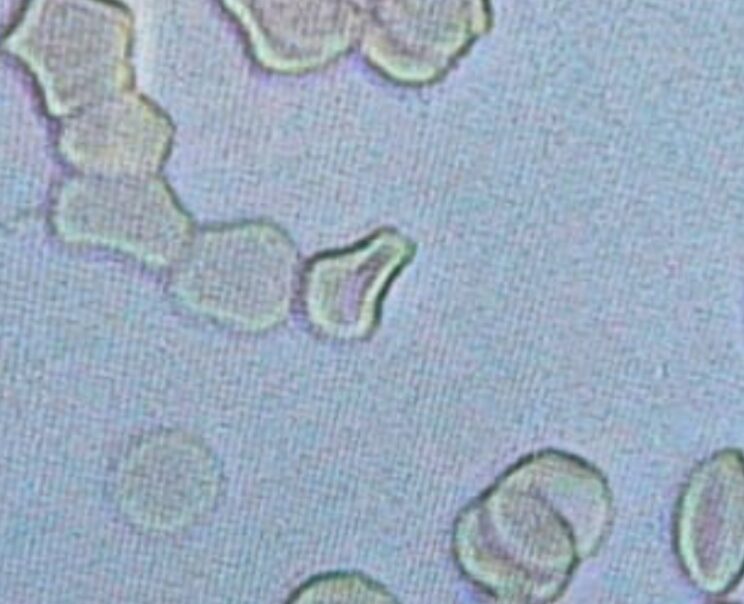
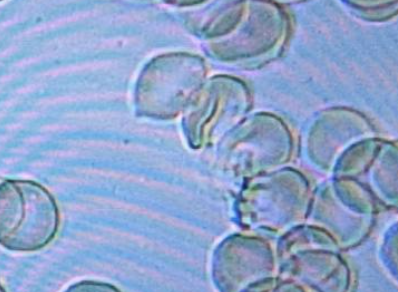
This is not something I see as separate from the way we are living, eating, digesting, and relating to food. The gallbladder is not an isolated organ. It is part of the whole digestive orchestra. When it is not flowing well, the body gives us messages through digestion, energy, skin, stool, mood, sleep, and, yes, through the blood in this protusion marker.
What I feel strongly is that much of this stagnation is connected to the modern diet, especially seed oils and ultra-processed foods. These foods do not come from living soil, living kitchens, or living traditions. They are extracted, refined, manipulated, packaged, and preserved until the body no longer recognizes them as true nourishment. The liver and gallbladder then have to work harder to process what was never meant to be food in the first place.
Bile is sacred in the body. It is part of the river system. It helps us break down fats, absorb fat-soluble nutrients, move waste, and keep the digestive terrain flowing.
When bile becomes thick, sluggish, or poorly released, food tends to sit too long in the digestive tract, and fermentation begins to increase. We saw this clearly in the workshop as well, with many participants showing markers of fermentation in the blood.
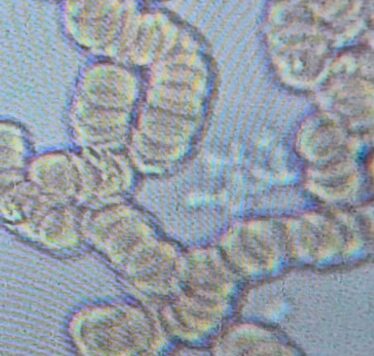
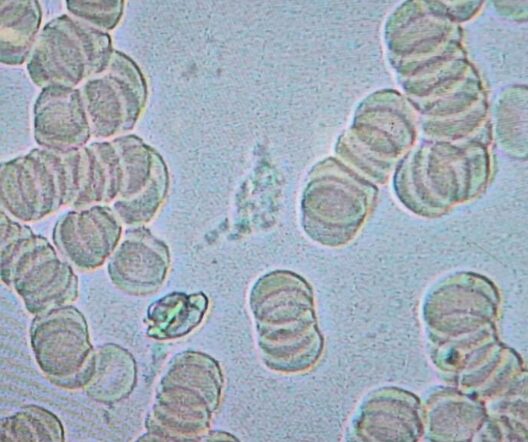
To me, these markers tell the same story. The gut terrain has shifted. The microbiome is reflecting stagnation instead of movement. This is where people may begin to notice bloating, heaviness after meals, burping, nausea with fats, floating stools, skin changes, low energy, and the sense that food is not being properly transformed into life.
In the same way that water must move through healthy soil, bile must move through the body. When soil is compacted, depleted, and fed chemicals instead of organic matter, the soil food web suffers. Water pools, roots struggle, microbes shift, and the whole system loses vitality. The human body is the same. When the digestive terrain is burdened by fake fats, processed foods, stress, and poor mineral flow, the inner ecosystem becomes stagnant.
This is why I always come back to the same truth: the human microbiome and the soil biome are not separate. We are an extension of the soil food web. If our food is grown in dead soil, processed in factories, and cooked in damaged oils, then the body has to carry that story. But when we return to real food, bitter plants, mineral-rich broths, living ferments, fresh herbs, clean fats, and food grown from living soil, the body remembers how to flow again.
The blood is a messenger. It is not something to fear and it shows us patterns. It shows us where the rivers are moving and where they are stuck. This week, the gallbladder (along with fermentation) spoke loudly. And for me, the message was clear: we need to return to foods that support bile flow, liver rhythm, microbial balance, and the living intelligence of the body.
The body is always trying to heal and often, it is not the body that is to blame. It is always trying to adapt. But we must stop asking it to make health out of substances that were never designed to nourish life. We must come back to the garden, the kitchen, the bitter herbs, the soil, the microbes, and the old ways of preparing food with care. Health begins in the terrain. And the terrain begins in the soil. So what do we do?
First, we remove what is creating the stagnation. Seed oils and ultra-processed foods have become normal, but normal does not mean nourishing. Replace them with traditional fats that the body has worked with for thousands of years. Eat food that your great-grandmother would recognize as food.
Bring bitterness back into the diet. Our ancestors naturally ate bitter greens and herbs, yet today most of our foods are sweet. Bitters prepare the digestive system for a meal. They stimulate the body’s own digestive intelligence, encouraging healthy stomach acid, digestive enzymes, and the release of bile. Herbs such as dandelion leaf and root, nettle, rosemary, yarrow, chamomile, Mexican tarragon, and gentle bitters before meals can make a remarkable difference over time.
Support the liver, because the liver makes the bile. The gallbladder simply stores, concentrates, and releases it. Mineral-rich foods, abundant leafy greens, quality protein, and adequate hydration all contribute to healthy bile production. Our liver is not designed to process a constant stream of refined foods, sugars, artificial ingredients, and damaged fats.
Herbs can also provide gentle support for the liver’s remarkable ability to produce bile and maintain healthy digestive flow. Dandelion root and leaf help encourage bile production while providing valuable minerals. Milk thistle has long been valued for supporting healthy liver cell function. Burdock root supports the liver and lymphatic system, while yellow dock encourages healthy digestive secretions. Artichoke leaf is well known for supporting bile production and fat digestion. Rosemary stimulates digestive function and bile flow, and nettle provides the minerals needed for healthy enzyme production and overall liver function. Rather than forcing the liver to work harder, these herbs nourish and support its natural physiology, helping restore healthy flow over time.
The microbiome also deserves our attention. A sluggish gallbladder changes the terrain of the digestive tract. Food remains longer than it should, fermentation increases, and the microbial community shifts. Living fermented foods, cultured vegetables, kefir, yogurt, and a diet rich in diverse plant fibres help create an environment where beneficial microbes can flourish.
Healthy fats should not be feared. In fact, healthy fats require healthy bile. Avocados, olives, coconut, pasture-raised eggs, properly prepared nuts and seeds, and clean animal fats nourish the body when digestion is working well. If bile flow has been sluggish for years, some people may temporarily benefit from additional digestive support such as digestive bitters, enzymes, lipase, or ox bile while the body regains its own capacity. These should be viewed as temporary supports, not lifelong necessities.
Minerals matter a magnesium plays an important role in smooth muscle function, including the contraction of the gallbladder. A body that is mineral deficient often struggles to maintain healthy digestive rhythm. Sea vegetables, leafy greens, pumpkin seeds, mineral-rich broths, and good quality sea salt all help restore this foundation.
The nervous system cannot be ignored. Digestion only functions well when we are in a state of rest and connection. Eating slowly, chewing thoroughly, sharing meals with others, and taking a few deep breaths before eating are simple practices that activate the vagus nerve and prepare the digestive system to receive food. We cannot expect healthy digestion while rushing through meals or living in a constant state of stress.
Most importantly, reconnect with living food. Food grown in living soil carries a different story than food manufactured in a factory. Healthy soil supports healthy plants. Healthy plants nourish a healthy microbiome. A healthy microbiome supports healthy bile flow, digestion, immunity, and resilience. It is all connected.
Healing does not begin with chasing symptoms. It begins by restoring flow. Flow in the soil, digestive tract. liver and gallbladder – the rivers of the body. When we support those natural rhythms, the body often responds in remarkable ways because healing has always been one of its greatest strengths.
So how do people know when bile is sluggish?
This is the part that is so often misunderstood. Many people are told their digestion is “normal,” their bloating is “just aging,” their skin issues are random, their fatigue is stress, or their reactions to food are all separate problems. But often, the body is telling one connected story: bile is not flowing well.
When bile is sluggish, people may feel heavy after eating, especially after fats. They may burp after meals, feel nauseated with greasy foods, have pain or fullness under the right ribs, or feel pressure that can travel toward the right shoulder blade or back. They may feel full very quickly, even after a small meal. Some people have floating stools, pale stools, oily stools, or stools that smell stronger than normal. Others notice bloating, gas, constipation, loose stools, skin itching, dry skin, poor tanning, fatigue, brain fog, poor sleep, or cravings for sugar and starch at night.
This is where the misunderstanding happens. A person may think they cannot digest fat, so they remove fat. But the deeper question is not always, “Is fat bad for me?” The better question is, “Do I have enough bile flow to transform and use fat properly?” Healthy fats are not the enemy. Poor bile flow is the problem. Without bile, the body struggles to absorb the fat-soluble nutrients that support skin, hormones, bones, nerves, eyes, and deep cellular nourishment.
One of the first supports is to remove what thickens and burdens the terrain. Seed oils, ultra-processed foods, refined sugars, fake foods, and constant snacking all confuse the digestive rhythm. The body needs real meals, real fats, bitter plants, minerals, and time between meals so the digestive system can complete its work.
Bitters are one of the old ways. Bitter herbs wake up the digestive cascade. They tell the body, “Food is coming. Prepare.” Dandelion root and leaf, gentian, artichoke leaf, yarrow, chamomile, rosemary, Mexican tarragon, nettle, and other bitter greens can all help remind the liver and gallbladder to move. Even a small amount of bitter tea or tincture before meals can begin to change the conversation.
Magnesium is also important because the gallbladder is a smooth muscle organ. It must contract to release bile. If the body is low in minerals, especially magnesium, that contraction can become weak or sluggish. Food sources of magnesium include pumpkin seeds, sesame seeds, sunflower seeds, chia seeds, flax seeds, almonds, cashews, dark leafy greens, cacao, black beans, lentils, chickpeas, avocado, bananas, figs, sea vegetables, and mineral-rich broths. This is another reason I always come back to soil. If the soil is mineral-poor, the food is mineral-poor, and the body eventually becomes mineral-poor.
Ox bile can be useful for some people as a temporary support when fat digestion is very weak. It is not meant to replace the wisdom of the body forever. It is more like a bridge. If someone eats fat and feels nauseated, heavy, bloated, burpy, or sees floating/oily stools, ox bile may help provide bile salts at the moment the body needs support. It can help the body digest and absorb fats while the liver, gallbladder, minerals, and digestive rhythm are being restored.
Lipase can also be helpful because it is the enzyme that helps break down fats. Ox bile helps emulsify fat, while lipase helps chemically break it down. Some people need both for a time. Lipase is not something we need to find in food. It is something the body makes. The pancreas manufactures lipase using the amino acids, vitamins, and minerals supplied by a nourishing diet. Quality protein provides the building blocks, while minerals such as zinc and magnesium help support healthy pancreatic function. Healthy fats also play an important role because they stimulate the release of lipase when they enter the digestive tract. When we nourish the body with real food grown in living soil, support healthy bile flow, and eat in a relaxed state, we give the pancreas the resources it needs to produce this remarkable enzyme naturally.
Ox bile provides bile salts, which help break large fat globules into smaller droplets so lipase can do its job more effectively. For some people, ox bile can be a helpful temporary bridge when their own bile flow is sluggish, especially if they feel heavy, nauseated, bloated, or burpy after eating fats, or if they notice floating, oily, pale, or difficult stools. When looking for ox bile, read the label carefully and look for a simple product that clearly says “ox bile” or “bile salts.” Some formulas combine ox bile with pancreatic enzymes, lipase, protease, amylase, or betaine HCl, which may be useful for some people, but I prefer people understand what each ingredient is doing rather than taking a large formula blindly. It is usually taken with meals that contain fat, not on an empty stomach. More is not better. The goal is always to use the least amount needed while restoring the body’s own bile flow.
Coconut oil can be a gentle starting fat for some people because it is easier to absorb than many other fats. It can offer energy while the deeper bile system is being restored. Pumpkin seeds are another simple food medicine because they provide magnesium, zinc, and grounding mineral support.
The nervous system matters just as much as the food. Bile does not flow well when the body is under stress. Digestion belongs to the rest-and-digest state, where the body feels safe enough to send energy, blood flow, and attention toward the stomach, liver, gallbladder, pancreas, and intestines. The vagus nerve is a major part of this digestive on-switch. It helps signal stomach acid, bile release, pancreatic enzymes, and healthy intestinal movement. When we eat while rushed, anxious, angry, distracted, or overwhelmed, this signal becomes weaker, and digestion slows.
Before eating, it helps to slow down enough for the body to actually receive the food. Sit down, breathe, smell the meal, chew well, and take a moment of gratitude. These simple rituals tell the nervous system that it is safe to digest. Practices such as humming, singing, gargling, slow exhalations, gentle belly breathing, and calm conversation can help awaken the vagus nerve and bring the body back into its digestive state. This is directly connected to bile flow. When the nervous system is calm, the gallbladder, liver, pancreas, and gut receive the message that it is time to work together.
And then we come back to the microbiome. Poor bile flow changes the gut terrain. Food sits longer. Fermentation increases. Microbes shift. The small intestine can become burdened. The liver receives more waste from the gut. The gallbladder becomes more sluggish. It becomes a loop. This is why we cannot separate the gallbladder from the microbiome, the liver, the nervous system, the minerals, or the soil.
The solutions are not complicated, but they do require a return. Return to real food bitter plants, minerals, healthy fats and meal rhythm. Return to living ferments and foods grown in healthy soils.
The gallbladder is not broken and the body is not stupid. When we see the protusion marker, it is a clue to help the liver and bile restore and do so by supporting rather than harsh detoxing. It is adapting to what it has been given. When we change the terrain, the body often remembers how to flow again, naturally.


