
 Leisha
 I often see what I recognize as uric acid crystals when I am looking at live blood under the microscope. Sometimes there are only a few, and other times there are many scattered throughout the plasma. It is something I have seen often enough over the years that I recognize the pattern and consider what may be happening with uric acid production, the kidneys, elimination and the person’s overall terrain.
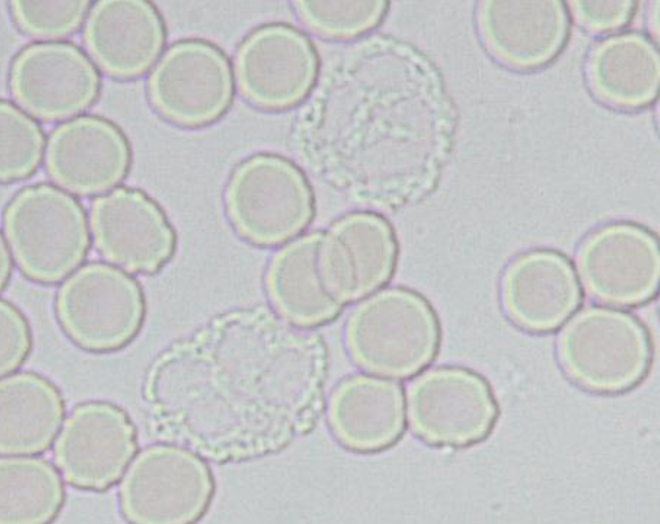
Recently I had a client whose blood caught my attention for another reason. Her neutrophils were extremely active and enlarged. They were very noticeable in the sample, and because I was also seeing a considerable amount of what I identify as uric acid crystallization, I started wondering whether the two could be connected. Could the uric acid actually be stimulating this immune activity? I started digging through the research to see if there was any correlation.
Apparently, there is, and the connection!
Uric acid is a normal part of human metabolism. Other acids we see are the waste of metabolism and cellular function. Uric Acid is produced it when purines are broken down, both through the normal turnover of our own cells and from purines coming through the diet. Much of the uric acid we produce is handled through the kidneys, with the intestinal tract also participating in its elimination.
Having uric acid does not mean someone has gout, and even elevated serum uric acid does not automatically mean gout will develop. What becomes particularly interesting is what happens when uric acid accumulates and forms monosodium urate crystals or what live blood analysts call “kidney crystals”
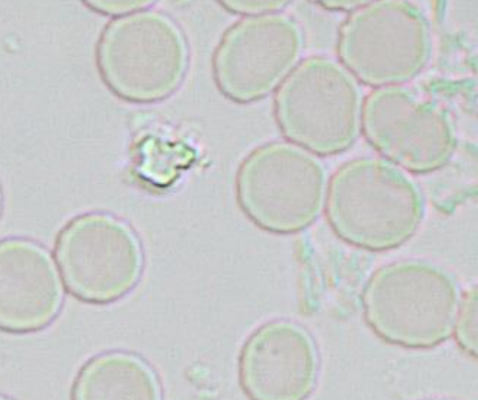
Gout is one very obvious example of what can happen when these crystals accumulate in and around a joint. The big toe is famous for it, but urate crystals can also deposit in the feet, ankles, knees, fingers, wrists, elbows and other joints and surrounding tissues. I often describe them as looking like tiny shards of glass. They are not glass, of course, but it is an easy way to picture something that was dissolved within fluid and has now formed a solid crystal. With long-standing gout, collections of these crystals can build into larger deposits called tophi.
What I discovered while researching my client’s very active neutrophils was that the pain and inflammation associated with these crystals is not simply a mechanical problem caused by something sharp sitting inside a joint. The immune system recognizes monosodium urate crystals and responds to them, and that response can be very powerful.
I found a 2006 study published in Nature that helped me understand what may be happening. The researchers found that uric acid crystals can switch on an alarm system inside certain immune cells called the NLRP3 inflammasome. Once that alarm is activated, the immune cells release inflammatory messengers, including IL-1β and IL-18. These messengers help call neutrophils into the area, which means the crystals are not just sitting there quietly. They can actually trigger an immune response and keep those immune cells busy dealing with the irritation.
Gout-associated uric acid crystals activate the NALP3 inflammasome
https://www.nature.com/articles/nature04516
Research into uric acid and the immune system also shows how important macrophages are in beginning this response. Macrophages are immune cells that live throughout our tissues, continually watching what is happening around them. When they encounter uric acid crystals, they recognize them as a signal that something needs attention and begin releasing inflammatory messages. These messages call other immune cells, especially neutrophils, into the area to respond. Researchers found that when fewer macrophages were present, there was much less inflammatory signalling and far fewer neutrophils were recruited, showing that the uric acid crystals themselves can set a much larger immune response in motion.
Resident macrophages initiating and driving inflammation in a monosodium urate monohydrate crystal-induced murine peritoneal model of acute gout
https://pubmed.ncbi.nlm.nih.gov/19116939/
Now the neutrophils I had been watching under the microscope became much more interesting to me. Uric acid crystals are not simply sitting there doing nothing. Research shows that the immune system can recognize urate crystals as a danger signal, macrophages can respond, inflammatory signalling begins and neutrophils are recruited into the response.
This creates what I think of as a revolving door of inflammation. Uric acid crystals stimulate immune activity, but that does not necessarily mean we have created a stronger immune system. The immune cells have been given a job to do. If the stimulus continues, they continue responding to it, and considerable immune activity can remain directed toward that irritation. The immune system is active, but it is also busy.
This is the connection I had been looking for. When I saw those enlarged, extremely active neutrophils, I wondered what was keeping them so active. Finding the uric acid research gave me another piece to consider when I see this combination in live blood.
Researchers sometimes describe uric acid as an endogenous danger signal, which simply means that the warning signal is coming from inside the body itself. Our immune system is not only watching for things coming in from the outside. It is also constantly reading what is happening within our own tissues. When cells are damaged, stressed or breaking down, they release substances that can alert the immune system, and uric acid can be one of those signals.
This has been seen in several different parts of the body. In the lungs, uric acid has been shown to activate the NLRP3 inflammasome and contribute to inflammatory signalling. During pregnancy, researchers have also found that uric acid can activate this same inflammatory pathway in trophoblast cells of the placenta, increasing IL-1β production and possibly contributing to the inflammation seen in preeclampsia.
Uric acid has also been studied in connection with metabolic syndrome, cardiovascular disease, diabetes, kidney disease and other conditions where chronic inflammation is part of the picture. Elevated uric acid is often found alongside insulin resistance and metabolic dysfunction, which is another reason I do not think it makes sense to look at uric acid as an isolated problem. It is much more useful to look at the terrain around it and ask what is happening with metabolism, elimination and the immune response.
Uric acid itself is not simply “bad.” We make it naturally as part of normal metabolism, and in the right amount it has useful roles, including acting as an antioxidant in the fluids surrounding our cells. The body is designed to produce uric acid, keep it circulating in a soluble form, and then remove what it no longer needs, primarily through the kidneys and also through the intestinal tract.
For me, the problem is not the existence of uric acid but what happens when that normal cycle gets out of balance. Are we producing more than we can comfortably eliminate? Are the kidneys able to move it out efficiently? Is the intestinal system participating as it should? Is there enough fluid moving through the system? Is the uric acid remaining dissolved, or are conditions allowing it to begin forming crystals? Once crystallization occurs, we have another part of the story because those crystals can get the attention of the immune system.
This is why I do not look at uric acid as something that simply needs to be removed. I want to understand why it is accumulating and what the terrain around it looks like. If the immune system is continually responding to uric acid crystals, then lowering that burden may mean there is less irritation for macrophages and neutrophils to respond to. The goal is not to eliminate something the body naturally makes, but to restore the balance between production, circulation and elimination so the immune system is not continually being called into the same work.
Where Acid and Alkaline Fit Into This
I also consider uric acid within the larger acid and alkaline picture, but I am not talking about changing the pH of the blood. The body keeps blood pH within a very narrow range because so many biological processes depend upon it. What I am interested in is all the work the body has to do every day to keep it there. Metabolism continually produces acids and other waste products that have to be buffered, transformed and moved out, and the kidneys, lungs, digestive system, bicarbonate systems and our mineral reserves are all involved in that process. This is the difference between blood becoming dangerously acidic and what the acid-base work I have studied describes as latent acidosis, where the blood is still maintaining its normal pH but the body may be drawing more heavily upon its mineral and alkaline reserves to do so.
I think of those mineral reserves as a bank account. We are continually making deposits and withdrawals. Minerals coming through our food help build the reserve, while normal metabolism and the processing and elimination of acids require the body to draw upon it. If the withdrawals continually exceed the deposits, the bank account begins to run down. The blood may still maintain the pH it needs, but according to this acid-base model, it is the reserves and the surrounding terrain that begin to show the strain.
This is also why I find saliva and urine pH useful as simple tools for following the terrain over time. I think of saliva as giving us a window into the bank account, or the mineral reserve available to the body, while urine gives us a window into what is being withdrawn and moved out. Urine pH naturally changes throughout the day as we eat, digest, metabolize and eliminate, so one isolated reading does not tell the whole story. Looking at the pattern over time can give us another piece of information about how well the body is managing its daily metabolic load and maintaining those reserves.
Supporting the Terrain
When I see a strong uric-acid-type pattern in live blood, the kidneys are something I think about because producing uric acid is only one side of the equation. It also has to leave. This is why I do not reduce uric acid to a particular food or simply tell someone to avoid purines. Our own cellular turnover contributes purines, and kidney handling, hydration and metabolic health all influence the amount of uric acid circulating in the body.
Celery is one of my favourite foods for supporting this terrain. It brings water, potassium and plant compounds into the diet, and research on celery seed has also found effects on uric acid pathways, including inhibition of xanthine oxidase, an enzyme involved in producing uric acid. (PubMed)
I also like nettle, especially as a mineral-rich tea. Nettle has a long history of use for kidney and urinary support, and research has identified compounds in Urtica dioica that may influence pathways involved in uric acid metabolism and inflammatory signalling. (PubMed)
Pomegranate is another food I like here, including the fruit and the leaves when they are available. The fruit is particularly rich in polyphenols and other antioxidant compounds that help support the oxidative and inflammatory terrain that can accompany elevated uric acid. Some experimental research has also found reductions in serum uric acid with pomegranate extracts, although the evidence for directly lowering uric acid in people is still limited. (PubMed Central (PMC)) Pomegranate leaves are something I use traditionally as a tea, but I would describe them more as part of the overall plant support rather than claiming that we have strong human research showing that the leaves themselves lower uric acid.
Lemon water is another very simple addition. Lemon provides citrate, and citrate influences urine chemistry while the water itself supports urine volume and kidney elimination. A recent pilot study also found that six weeks of lemon water was associated with lower serum urate and improved kidney filtration in people with elevated uric acid, which makes this simple habit particularly interesting. (PubMed)
Alfalfa is another plant I like, particularly after meals, because it brings a wide range of minerals and plant nutrients into the diet. For me, its place here is largely about helping replenish the mineral side of the terrain, especially when the diet has been depleted and the body has been making more withdrawals than deposits.
I also encourage plenty of foods naturally rich in vitamin C. Vitamin C has been studied for its ability to modestly lower serum uric acid, partly by increasing the amount of uric acid that is excreted through the kidneys. I prefer getting it through whole foods such as citrus, guava, berries, peppers, leafy greens and fresh herbs because then the vitamin C arrives together with minerals, fibre, phytonutrients and food for the microbiome.
Uric acid crystals can also become a problem in the kidneys. When the urine becomes highly concentrated with uric acid, particularly when the urine remains acidic, the uric acid is less able to stay dissolved. It can begin to crystallize, and those small crystals can collect together and gradually form uric acid kidney stones.
This connects directly with the larger terrain because hydration, urine pH, how much uric acid is being produced and how effectively the kidneys are moving it out all influence whether uric acid remains dissolved or begins crystallizing. It is another example of why I am interested in the conditions surrounding uric acid, not simply the amount that is present.
In these situations, Chanca Piedra (Phyllanthus niruri) is one of the herbs I would consider. Its name means “stone breaker,” and it has a long traditional history of use for kidney stones. Research suggests that it may influence urinary chemistry and some of the processes involved in stone formation, although I would not claim that research has proven that the herb itself directly dissolves uric acid stones.
Uric acid stones themselves are particularly interesting because they can dissolve when the chemistry of the urine changes and the urine becomes less acidic. This brings the conversation right back to acid and alkaline balance, hydration and kidney function. The goal is to create conditions where uric acid is more likely to remain dissolved and can move out through the urine, while also supporting the kidneys and urinary flow so that crystals are less likely to continue collecting and growing.
None of these foods works because it is a magic uric-acid remedy. They work in different ways by supporting hydration, kidney elimination, mineral reserve, urine chemistry, antioxidant balance and the larger metabolic terrain. That is what I am interested in building: a body that can make uric acid normally, keep it moving, and remove what it no longer needs without continually calling the immune system into the same inflammatory work.
Reasonable hydration, movement and fresh air are simple things that should not be overlooked. Walking, gardening, stretching and rebounding keep the body moving and support circulation and lymphatic flow, while relaxed deeper breathing supports the continual removal of carbon dioxide through the lungs. These are ordinary things, but they are part of how the body continually processes and moves what it no longer needs.
Uric acid is not bad. We are supposed to make it. We are supposed to move it. When I see a large amount of what I identify as uric acid crystallization in live blood, I want to understand what has changed in that cycle and what the rest of the terrain is showing me.
My recent client gave me another part of that picture. I was seeing a considerable amount of uric acid crystallization in her blood, along with neutrophils that were unusually enlarged and extremely active. That combination made me curious, so I went looking for research to see whether there could be a connection. What I found was that uric acid crystals are very capable of getting the attention of the immune system, activating inflammatory signalling and calling immune cells, including neutrophils, into action.
Now, when I see this combination in live blood, I understand it differently. I am not only interested in the amount of uric acid I am seeing, but also in what the immune system may be doing in response to it. If those immune cells are continually being called upon to respond to the same irritation, then I want to look at what can be done to support the terrain, the kidneys and the normal movement and elimination of uric acid. If we can reduce that burden, perhaps we can also reduce the amount of time the immune system spends going around that same revolving door of inflammation.
Uric acid directly promotes human T-cell activation
https://pubmed.ncbi.nlm.nih.gov/19057377/
Recent developments in immune activation by uric acid crystals
https://pubmed.ncbi.nlm.nih.gov/20502971/
Uric acid is a danger signal activating NALP3 inflammasome in lung injury inflammation and fibrosis
https://pubmed.ncbi.nlm.nih.gov/19218193/


